Category: Uncategorized

  • What to Look for When Buying Kitchen Cabinets

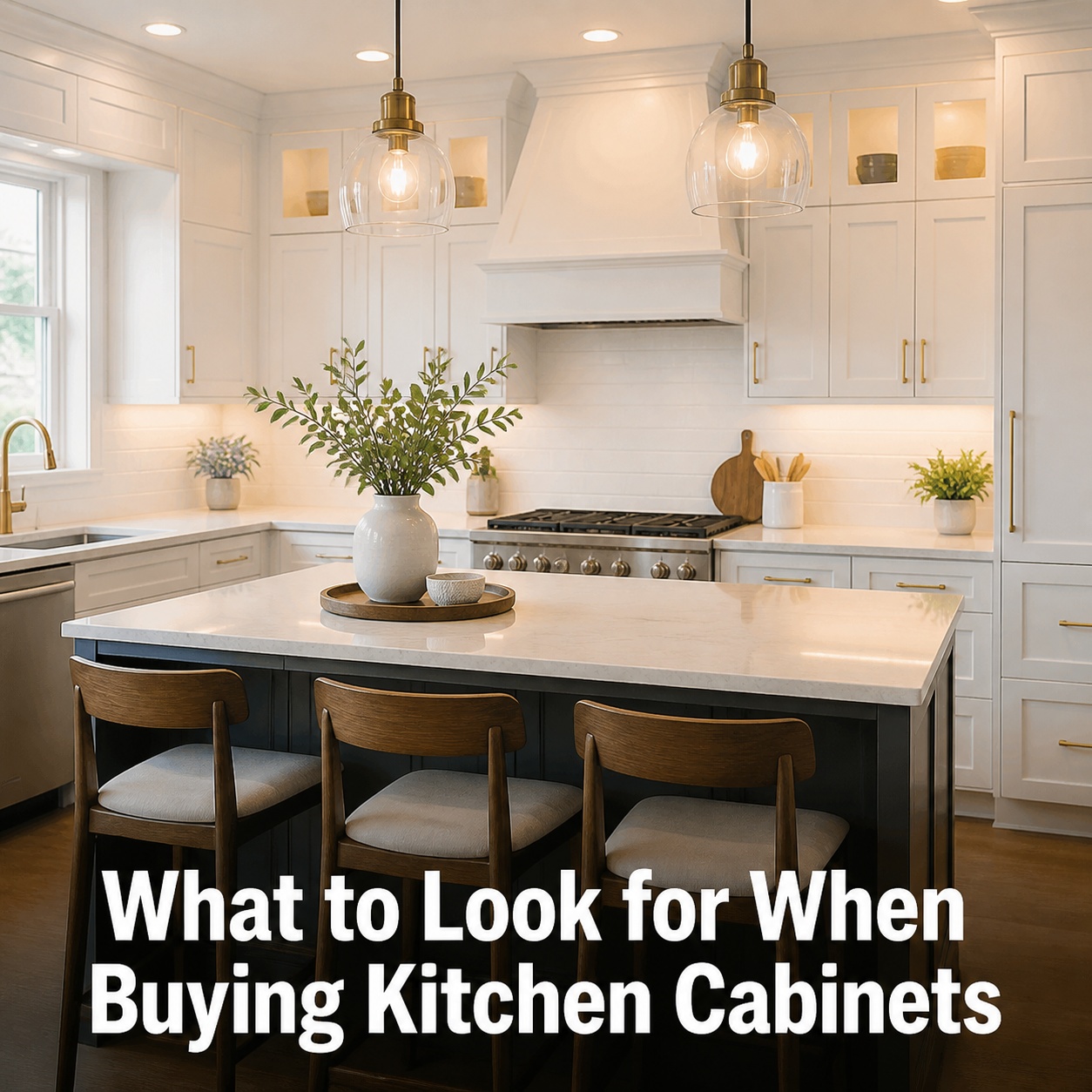
    What to Look for When Buying Kitchen Cabinets

    Buying kitchen cabinets is one of the most significant investments you will make in your home. The choices you make affect not just how your kitchen looks, but how it functions every single day. Cabinet construction, cabinet materials, and cabinet quality all play into whether you end up with something that lasts decades or something that disappoints within a few years.

    Most homeowners underestimate how complex the buying process actually is. From understanding what is included in a cabinet package to redeeming promotions correctly, there are several steps where things can go wrong. Getting informed before you commit saves you money, frustration, and time.

    This guide walks you through every stage of the process — from evaluating your purchase offer to confirming your discount was applied and your order is accurate. If you have ever felt overwhelmed by cabinet options, pricing structures, or ordering steps, this is the resource you need.

    Understanding Your Kitchen Cabinet Purchase Offer

    Before you sign anything or hand over a deposit, you need to fully understand what the offer in front of you actually includes. Cabinet brands present their packages differently, and the details matter enormously.

    Key Elements Included in the Cabinet Package

    A solid cabinet package should clearly outline what you are receiving. Cabinet style, cabinet finish, and cabinet door styles should all be specified in writing. Do not assume anything is included unless it is explicitly listed.

    Pay close attention to whether hardware is part of the deal. Cabinet hardware like hinges, pulls, and soft close hinges are sometimes sold separately, which can add unexpected costs to your budget.

    Here is a quick reference table showing what is commonly included versus what is often an add-on:

    Typically Included Often an Add-On
    Cabinet boxes and doors Soft close hinges
    Basic shelving Drawer slides upgrades
    Standard cabinet finish Custom cabinet hardware
    Assembly instructions Professional installation
    Basic warranty Extended cabinet warranty

    What Is and Is Not Covered in the Offer

    Cabinet warranty terms vary widely between stock cabinets, semi-custom cabinets, and custom cabinets. Stock cabinets typically carry shorter warranties, while custom options often come with more comprehensive coverage. Always read the fine print.

    Cabinet installation is rarely included in the base price, even when retailers make it sound like a seamless package. Ask directly whether labor, delivery, and removal of old cabinets are covered.

    Understanding plywood vs particleboard construction is also critical here. Plywood boxes hold screws better and resist moisture more effectively, making them a smarter long-term choice even if the upfront cost is higher.

    Comparing Multiple Cabinet Offers Side by Side

    Never accept the first offer you receive. Comparing multiple quotes helps you understand the true market value of what you are buying. Look at cabinet depth, wood types, and whether face frame cabinets or frameless cabinets are being offered.

    If you are unsure how to evaluate quality differences between packages, reading about how cabinet grades are structured can give you a clearer framework for comparison. It removes the guesswork from what looks like a good deal versus what actually is one.

    Focus on cabinet resale value as well. Higher-quality materials and construction methods tend to return more value if you ever sell your home.

    Sign-Up and Ordering Details

    Once you have chosen your cabinet package, the ordering process begins. This stage requires accuracy and attention to detail to avoid costly mistakes.

    Information You Need Before Placing Your Cabinet Order

    Gather your kitchen layout measurements before you do anything else. Cabinet depth, wall dimensions, ceiling height, and appliance placements all affect which configurations will work. Errors here lead to cabinets that do not fit or leave awkward gaps.

    • Accurate wall-to-wall measurements
    • Ceiling height from floor level
    • Window and door placement details
    • Appliance dimensions and locations
    • Plumbing and electrical outlet positions

    You should also decide between stock cabinets, semi-custom cabinets, and custom cabinets before placing your order. Each category has different lead times, pricing structures, and customization options that affect the entire process.

    How to Complete the Online or In-Store Sign-Up Process

    Most cabinet retailers now offer both online and in-store ordering. Online platforms typically ask you to create an account, enter your measurements, select your cabinet style and cabinet finish, and upload any design files if applicable.

    In-store sign-up gives you the advantage of speaking directly with a design consultant who can catch measurement errors or suggest cabinet storage solutions you may not have considered. Either path works, but in-store tends to reduce ordering mistakes for first-time buyers.

    Keep records of every step. Screenshot your selections, save confirmation emails, and note the name of any representative who assists you.

    Payment Terms, Deposits, and Approval Steps

    Most cabinet orders require a deposit ranging from a portion to the full amount upfront, depending on whether you are ordering stock or custom cabinets. Understand the refund policy before you pay anything.

    Approval steps may include a design review, a measurement verification call, or a digital sign-off on your cabinet layout. Do not skip these steps even if they feel like formalities. They protect you if something goes wrong later.

    Cabinet budget planning should account for the deposit, remaining balance, delivery fees, and any installation costs. Build in a buffer for unexpected expenses.

    Steps to Redeem Promotions and Discounts

    Promotions can significantly reduce your cabinet budget, but only if you apply them correctly. Missing a step means missing the savings.

    Locating Eligible Promotions for Kitchen Cabinets

    Featured image

    Start by checking the retailer’s official website, email newsletters, and loyalty program portals. Many cabinet brands run promotions tied to specific cabinet styles, wood types, or cabinet door styles, so eligibility is not always universal.

    • Check the retailer’s promotions page directly
    • Sign up for email alerts to catch limited-time offers
    • Ask in-store staff about unadvertised discounts
    • Look for bundle deals that include cabinet hardware

    If you are comparing options across retailers, resources that highlight top-value cabinet picks can help you identify which brands consistently offer the best combination of quality and price. That context makes promotional offers easier to evaluate.

    Applying Promo Codes or Offer IDs at Checkout

    Promo codes are typically entered during the checkout process in a designated field. Offer IDs may need to be referenced during an in-store transaction or entered into an account portal before checkout begins.

    Always apply your promo code before finalizing payment, not after. Most systems do not allow retroactive discounts once an order is submitted. Double-check that the code field accepted your entry and that the discount appeared in your order total.

    If a code fails, contact customer support immediately. Have the promotion details ready, including any reference numbers or expiration terms listed in the offer.

    Confirming That Your Discount Has Been Successfully Applied

    After applying a promo code, your order summary should reflect the reduced price before you complete payment. Look for a line item that shows the discount amount separately from the subtotal.

    Request a written confirmation that includes the discounted price. This protects you if there is a billing discrepancy later. Save this document alongside your order confirmation for easy reference.

    Final Verification Before Your Cabinet Order Is Processed

    This is your last opportunity to catch errors before production or shipping begins. Take it seriously.

    Reviewing Order Summary, Measurements, and Custom Options

    Go through your order summary line by line. Verify cabinet style, cabinet finish, cabinet door styles, wood types, and any custom options you selected. Confirm that dovetail joints or drawer slides upgrades are listed if you requested them.

    Check cabinet depth and dimensions against your kitchen layout one more time. A single transposed number can result in cabinets that do not fit your space. If anything looks off, contact the retailer before approving the order.

    • Confirm all cabinet dimensions match your measurements
    • Verify finish and door style selections
    • Check that all hardware upgrades are included
    • Review the cabinet warranty terms listed

    Tracking Order Status and Delivery or Installation Dates

    Once your order is confirmed, you should receive a tracking number or order ID. Use this to monitor production and shipping progress. Stock cabinets typically ship faster than semi-custom or custom cabinets, so timelines vary.

    Coordinate your cabinet installation schedule around the confirmed delivery date. Having a contractor lined up before cabinets arrive prevents delays and keeps your project on track.

    What to Do If There Is an Issue With Your Redemption

    If your discount was not applied correctly or your order contains errors, act quickly. Contact customer support with your order number, the promotion details, and any screenshots or confirmation emails you saved.

    Most retailers have a resolution window during which corrections can be made without penalty. Outside that window, changes may incur fees or require a new order entirely. Staying organized throughout the process is your best protection.

    Conclusion

    Purchasing kitchen cabinets involves far more than picking a style you like. Cabinet construction, cabinet materials, cabinet quality, and the ordering process all require careful attention. Understanding your offer, completing sign-up accurately, applying promotions correctly, and verifying your order before it processes are the steps that separate a smooth experience from a stressful one. Take your time, ask questions, and keep records of everything.

    FAQ

    How do I know if my kitchen cabinet promotion was applied correctly?

    Your order summary should show the discount as a separate line item before you complete payment. If the total does not reflect the expected reduction, do not finalize the order. Contact support immediately with your promo code and offer details to resolve it before the order is submitted.

    Can I change my cabinet order after I have signed up and redeemed an offer?

    Changes are sometimes possible within a short window after ordering, but they may affect your promotional pricing or require reapproval. Custom cabinets and semi-custom cabinets are harder to modify once production begins. Always check the retailer’s change and cancellation policy before placing your order so you know your options upfront.

    What documents or confirmations should I keep after redeeming a cabinet deal?

    Keep your order confirmation email, the promotional offer details, payment receipts, and any written communication with the retailer. If cabinet installation is part of your package, retain those agreements separately. These documents protect you if there is a billing dispute, a warranty claim, or a delivery issue down the line.
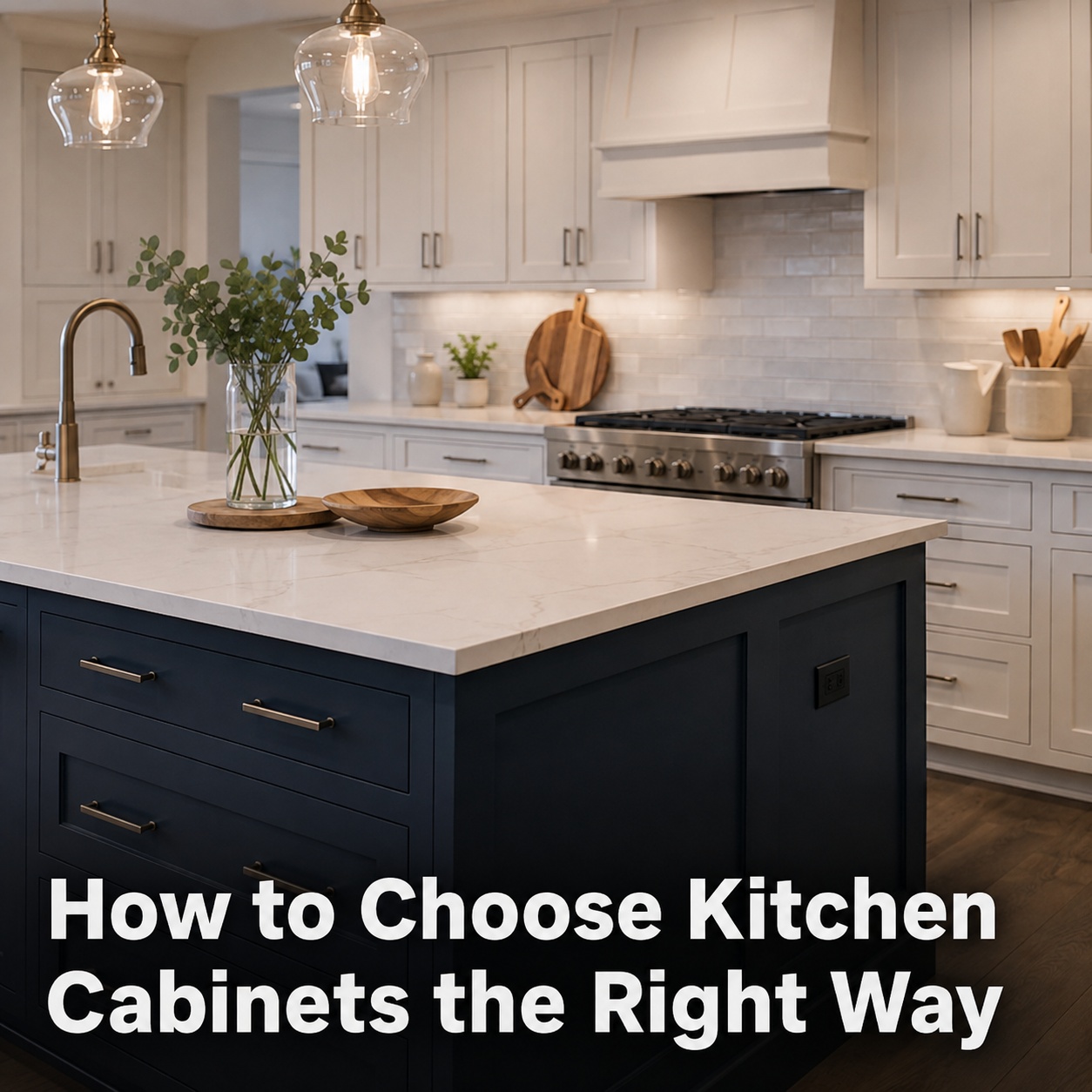

  • How to Choose Kitchen Cabinets the Right Way

    How to Choose Kitchen Cabinets the Right Way

    Choosing kitchen cabinets is one of the most significant decisions you’ll make during a kitchen remodel. Cabinets set the tone for the entire space, influence how functional your kitchen feels every day, and represent a major portion of your overall budget. Getting this decision right means thinking carefully before you ever step into a showroom or click “add to cart.”

    Most homeowners underestimate how many variables are involved. Cabinet style, cabinet material, wood type, cabinet color, storage space, and cabinet hardware all need to work together. Miss one piece of the puzzle, and you could end up with a kitchen that looks off, feels cramped, or costs far more than expected.

    This guide walks you through every stage of the process — from measuring your kitchen and setting a realistic cabinet budget to comparing brands, finishes, and installation options. By the end, you’ll have a clear, confident plan for choosing kitchen cabinets that fit your home, your lifestyle, and your wallet.

    Understanding Your Kitchen Cabinet Needs

    Assessing Your Space, Layout, and Storage Requirements

    Before you think about cabinet door styles or finishes, start with your kitchen layout. How much wall space do you have? Where are the windows, doors, and appliances? These factors directly determine what cabinet types will fit and how much storage space you can realistically gain.

    Walk through your current kitchen and note what frustrates you. Not enough drawer space? Awkward corner cabinets? Shelves too deep to reach? Your existing pain points are the best guide to what your new cabinets need to solve.

    Think about how you actually use your kitchen — cooking frequency, number of people, types of appliances, and how much you entertain. This shapes everything from cabinet depth to the number of specialty units you’ll need.

    Setting a Realistic Budget and Priorities

    Cabinet budget is where most kitchen remodel projects go sideways. It’s easy to fall in love with custom cabinets and then realize the cost is three times what you planned. Set your number before you start shopping, not after.

    A useful approach is to divide your budget into tiers: cabinets themselves, hardware, installation, and a contingency buffer. Most professionals recommend keeping at least ten percent of your total budget as a reserve for surprises.

    Prioritize what matters most to you. If you cook daily, invest in durable materials and smart storage solutions. If aesthetics drive your decision, allocate more toward cabinet finish and hardware quality.

    Choosing Between Stock, Semi-Custom, and Custom Cabinets

    Stock cabinets come in fixed sizes and are the most affordable option. They’re widely available and can work well in standard kitchen layouts. Semi-custom cabinets offer more size flexibility and finish options at a mid-range price point. Custom cabinets are built to your exact specifications and carry the highest cost.

    Cabinet Type Cost Level Lead Time Best For
    Stock Cabinets Low Immediate Standard layouts, tight budgets
    Semi-Custom Cabinets Mid 2–6 weeks More flexibility, moderate budgets
    Custom Cabinets High 8–16 weeks Unique layouts, premium finishes

    Your kitchen layout and budget will usually make this decision for you. If you’re unsure which direction to go, reading about cabinets that deliver the best value for your investment can help you narrow down your options before committing.

    Key Design Decisions: Style, Materials, and Colors

    Popular Cabinet Door Styles and How to Match Your Home

    Cabinet style should complement the overall design of your home, not fight against it. Shaker style cabinets are the most versatile and widely used — their clean lines work in traditional, transitional, and modern kitchens alike. Raised panel doors feel more formal and suit classic or colonial-style homes. Flat-panel or slab doors lean contemporary and minimalist.

    The cabinet door is the most visible element of your cabinetry, so choose a profile that you’ll still love years from now. Trendy styles can date quickly, while timeless profiles hold their appeal.

    Look at your home’s existing trim, flooring, and architectural details. Your cabinet style should feel like a natural extension of those elements, not a jarring contrast.

    Comparing Cabinet Materials, Finishes, and Durability

    Cabinet material determines how long your cabinets last and how they hold up to daily use. Solid wood is the premium choice — it’s durable, can be refinished, and looks beautiful. Plywood is the most recommended material for cabinet boxes because it resists moisture and holds screws well. MDF (Medium Density Fiberboard) is smooth and takes paint evenly, making it popular for painted cabinet doors.

    Cabinet finish affects both appearance and durability. Painted finishes offer a clean, modern look but can chip over time. Stained finishes showcase the natural wood grain and are easier to touch up. Thermofoil and laminate finishes are budget-friendly but harder to repair if damaged.

    Understanding how cabinet grades are defined and what separates quality levels will help you make smarter comparisons when you’re evaluating different brands and price points.

    Selecting Colors and Hardware That Work Together

    Cabinet color sets the mood of your entire kitchen. White and off-white remain the most popular choices because they brighten spaces and pair easily with most kitchen countertops. Navy, forest green, and charcoal have become strong alternatives for homeowners who want more personality. Two-tone kitchens — using one color for upper cabinets and another for base cabinets — add visual depth without overwhelming the space.

    Cabinet hardware is the jewelry of your kitchen. Pulls, knobs, and cabinet hinges should coordinate with your faucet, lighting fixtures, and appliance finishes. Brushed nickel, matte black, and brass are all strong choices depending on your overall palette.

    Don’t underestimate how much hardware changes the feel of a cabinet — the same door can look completely different with a simple knob versus a long bar pull.

    Functional Features and Interior Organization

    Planning Cabinet Types: Base, Wall, Tall, and Specialty Units

    A well-planned kitchen uses a mix of cabinet types to maximize every inch. Base cabinets sit on the floor and support your countertops. Wall cabinets mount above and provide upper storage space. Tall cabinets, like pantry units, run floor to ceiling and offer significant storage in a compact footprint. Specialty units include corner solutions, appliance garages, and open shelving sections.

    • Base cabinets: standard depth is 24 inches, height is 34.5 inches before countertop
    • Wall cabinets: typically 12 inches deep, available in various heights
    • Tall cabinets: ideal for pantry storage or housing built-in ovens
    • Specialty units: lazy Susans, blind corner pull-outs, appliance lifts

    Map out your kitchen layout on paper or use a free online tool before ordering. Knowing exactly which cabinet types go where prevents costly mistakes.

    Smart Storage Solutions: Drawers, Pull-Outs, and Organizers

    Modern kitchen cabinets offer far more than fixed shelves. Soft close drawers have become a standard expectation — they prevent slamming and extend the life of the cabinet. Pull-out shelves inside base cabinets make deep storage accessible without digging. Drawer organizers, spice pull-outs, and trash can units all add function without adding square footage.

    • Soft close drawers and hinges for quieter, longer-lasting operation
    • Pull-out trash and recycling units built into base cabinets
    • Deep drawer stacks for pots, pans, and bulky items
    • Vertical dividers for baking sheets and cutting boards

    Think about what you store and how often you access it. Frequently used items should be at eye level or in easy-reach drawers. Rarely used items can go in upper cabinets or deep corner units.

    Ergonomics and Accessibility for Everyday Use

    Good cabinet design reduces physical strain. Wall cabinets mounted too high force you to reach and strain your shoulders. Base cabinets without pull-outs make you crouch and dig. Ergonomic cabinet placement means your most-used items are between hip and shoulder height.

    If anyone in your household has mobility limitations, consider lower wall cabinets, pull-down shelf systems, and full-extension drawer slides. These features make the kitchen safer and more comfortable for everyone.

    Step-by-Step Process for Choosing and Buying Cabinets

    Measuring Your Kitchen and Creating a Simple Layout

    Accurate cabinet measurement is non-negotiable. Measure every wall from corner to corner, note the location of windows and doors, and record ceiling height. Measure twice — errors in measurement lead to gaps, misaligned cabinets, and expensive corrections.

    Featured image

    Sketch your kitchen layout to scale on graph paper. Mark where appliances, plumbing, and electrical outlets are located. This drawing becomes your planning tool for every cabinet decision that follows.

    Comparing Brands, Quality Levels, and Construction Details

    Not all kitchen cabinets are built the same. Look at how the cabinet box is constructed — plywood boxes outperform particleboard in moisture resistance and screw-holding strength. Check drawer slides: undermount, full-extension slides are the gold standard. Examine door hinges for smooth operation and adjustability.

    When comparing brands, look beyond price. A cheaper cabinet that warps or falls apart within a few years costs more in the long run. Comparing options like ready-to-assemble versus pre-assembled cabinets can also reveal significant differences in both cost and convenience depending on your situation.

    Working With Designers, Showrooms, and Installers

    A kitchen designer can save you from costly layout mistakes. Many cabinet showrooms offer free design consultations when you’re purchasing through them. Bring your measurements, photos of your current kitchen, and a clear sense of your style preferences.

    Cabinet installation quality matters as much as cabinet quality. Even excellent cabinets look poor if installed unevenly. Get at least two or three quotes from licensed installers and ask to see examples of their previous work.

    Reviewing Quotes, Warranties, and Finalizing Your Order

    Before signing anything, review every line item in your quote. Confirm that cabinet hardware, installation, and any specialty units are included or clearly excluded. Ask about lead times so your project timeline stays on track.

    Warranty terms vary widely between manufacturers. Look for at least a limited lifetime warranty on the cabinet box and a multi-year warranty on hardware. A strong warranty signals that the manufacturer stands behind their product’s durability.

    Troubleshooting Common Cabinet Selection Problems

    What to Do If Your Choices Exceed Your Budget

    If your selections are over budget, start by revisiting cabinet type. Switching from custom to semi-custom, or from semi-custom to stock cabinets, can save thousands without sacrificing quality. You can also reduce the number of specialty units or choose simpler cabinet door profiles.

    Another option worth exploring is whether your existing cabinet boxes are in good condition. If they are, refacing your current cabinets instead of replacing them entirely can dramatically cut costs while still delivering a fresh, updated look.

    Fixing Mismatched Styles, Colors, or Finishes

    Mismatched cabinets usually happen when decisions are made in isolation. Choosing a cabinet color without considering your kitchen countertops, flooring, or backsplash is a common mistake. Always evaluate your selections together, not separately.

    If you’ve already ordered and realize something feels off, cabinet hardware can sometimes bridge a style gap. Swapping out pulls and knobs is inexpensive and can unify a look that feels disconnected.

    Dealing With Limited Space, Odd Corners, and Obstructions

    Small kitchens and awkward layouts require creative solutions. Blind corner cabinets with pull-out organizers reclaim otherwise wasted space. Tall pantry cabinets maximize vertical storage when floor space is limited. Open shelving in tight spots can feel less visually heavy than full upper cabinets.

    Obstructions like pipes, beams, or uneven walls may require filler strips or custom modifications. Plan for these early — discovering them mid-installation causes delays and added costs.

    Conclusion

    Choosing kitchen cabinets well requires patience, planning, and a clear understanding of your priorities. Start with your space and budget, work through style and material decisions carefully, and don’t skip the functional details that make a kitchen genuinely enjoyable to use. The process takes time, but the result — a kitchen that works beautifully and looks exactly right — is absolutely worth the effort.

    FAQ

    How do I know if I should choose stock, semi-custom, or custom cabinets?

    Start with your kitchen layout and budget. Stock cabinets work well in standard-sized kitchens where off-the-shelf dimensions fit without major gaps. Semi-custom cabinets suit kitchens that need slightly different sizing or more finish options. Custom cabinets make sense for unusual layouts, high-end finishes, or when nothing else fits your specific needs.

    What cabinet features give the best value for a small kitchen?

    In a small kitchen, prioritize storage efficiency over aesthetics. Soft close drawers, pull-out shelves, and tall pantry cabinets give you the most usable space per square foot. Avoid bulky specialty units that eat up room without adding proportional storage. Simple shaker style doors in a light cabinet color will also make the space feel larger and more open.

    How can I be sure the cabinets I choose are good quality?

    Look at the box construction first — plywood is more durable than particleboard. Check that drawer slides are full-extension and undermount. Test the cabinet hinges for smooth, adjustable operation. Ask about the cabinet finish process and whether it’s applied by hand or machine. Reading independent reviews and understanding cabinet grades before you buy will give you a much clearer picture of what you’re actually getting for your money.

  • Paint or Replace Kitchen Cabinets: Which Is Worth It?

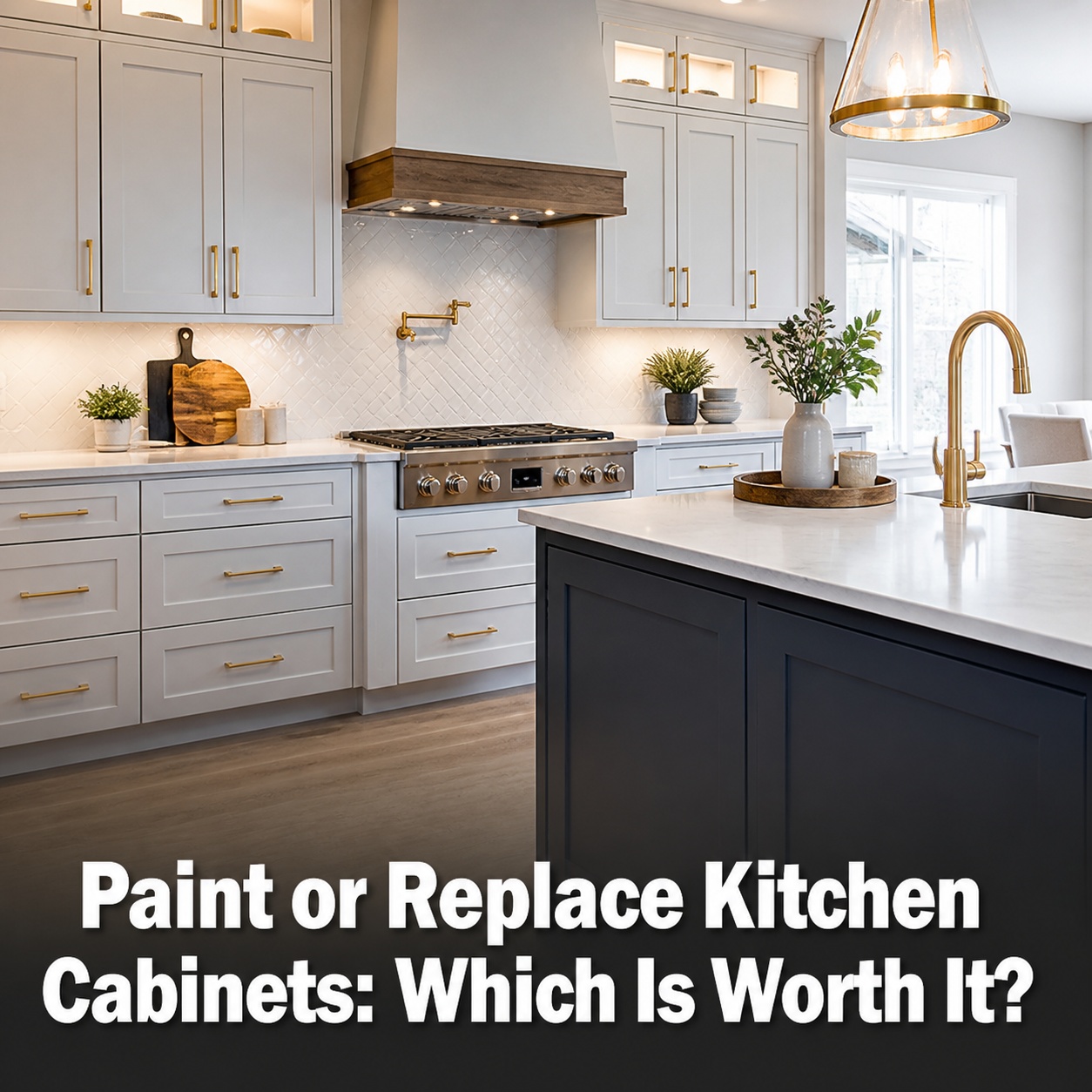
    Paint or Replace Kitchen Cabinets: Which Is Worth It?

    Your kitchen cabinets take up more visual real estate than almost anything else in the room. They set the tone for the entire space, and when they start looking tired, dated, or worn, the whole kitchen feels that way too. The question most homeowners face is straightforward but not simple: do you paint what you have, or do you tear it all out and start fresh?

    Both options have genuine merit, and neither is universally the right answer. The best choice depends on the condition of your existing cabinets, your budget, your goals for the space, and how long you plan to stay in the home. This guide walks through both paths honestly so you can make a decision that actually makes sense for your situation.

    Understanding Your Existing Kitchen Cabinets

    Before you spend a dollar on paint or new cabinet boxes, you need to know exactly what you’re working with. A thorough assessment of your current cabinets will tell you more than any cost calculator ever could.

    Assessing Cabinet Structure, Layout, and Functionality

    Start with the bones. Open every door, pull out every drawer, and check how everything moves and fits. Solid, well-functioning cabinet boxes with good kitchen layout are strong candidates for painting rather than replacement.

    If your kitchen layout works for how you cook and live, that’s a significant point in favor of painting. Changing the layout means replacing cabinets entirely, which is a much larger project.

    Cabinet Feature Paint-Friendly Replace Instead
    Cabinet boxes Solid, no warping Soft, swollen, or rotted
    Cabinet doors Flat or simple profile Heavily ornate or damaged
    Kitchen layout Works well as-is Needs reconfiguration
    Cabinet hardware Replaceable easily Non-standard sizing
    Drawer function Smooth operation Broken slides or frames

    Evaluating Surface Condition, Material, and Finish

    The material your cabinets are made from matters enormously. Wood cabinets and MDF surfaces accept paint well when properly prepared. Thermofoil and laminate surfaces are trickier and often peel after painting.

    Understanding your cabinet grades before making any decision can save you from costly mistakes. If you’re unsure what your cabinets are made of or how they were constructed, reviewing a resource on cabinet quality and construction grades can help you evaluate whether your existing units are worth the investment of a fresh coat of paint.

    Check the existing finish carefully. Glossy surfaces need sanding and primer before paint will adhere properly. Peeling veneer or bubbling laminate is a red flag that painting alone won’t fix.

    Identifying Common Problems: Wear, Damage, and Outdated Style

    Surface scratches, minor dings, and faded finishes are all paintable problems. Structural damage, water intrusion, and cabinet condition issues like soft wood or mold are not.

    Outdated cabinet styles are often a cosmetic issue that paint and new cabinet hardware can address effectively. A flat-front door in a dated oak finish can look completely transformed with the right paint color and updated pulls.

    • Surface scratches and scuffs: paintable
    • Faded or yellowed finish: paintable
    • Minor dents or dings: paintable with filler
    • Water damage or swelling: replacement needed
    • Structural instability: replacement needed
    • Mold or pest damage: replacement needed

    Pros and Cons of Painting Kitchen Cabinets

    Cabinet painting is one of the most popular DIY projects for a reason. It delivers a dramatic visual change at a fraction of the cost of full replacement. But it’s not without its limitations.

    Cost, Time, and Skill Level Required for Painting

    Painting kitchen cabinets yourself typically costs between a few hundred dollars in materials. Hiring a professional painter brings that number up significantly, but the results are usually far superior to a rushed DIY project.

    The time investment is real. Proper cabinet painting involves removing all cabinet doors, cleaning every surface, sanding, applying primer, painting multiple coats, and reinstalling everything. Budget at least a full weekend for a small kitchen, and longer for larger spaces.

    • DIY material costs: lower upfront investment
    • Professional painter fees: higher but better finish quality
    • Time required: several days minimum
    • Skill level: moderate to high for best results

    Design Flexibility, Color Choices, and Trend Considerations

    One of the biggest advantages of cabinet painting is the sheer range of paint colors available. You can go bold with navy or forest green, stay classic with white or cream, or try something unexpected. Chalk paint has become a popular option for homeowners who want a matte, vintage-inspired finish without heavy prep work.

    Kitchen design trends shift, and paint lets you shift with them affordably. If you tire of a color in a few years, repainting is far less disruptive than full cabinet replacement.

    Keep in mind that very trendy paint colors can date a kitchen just as quickly as they refresh it. Neutral tones tend to have longer staying power and broader appeal if resale is a consideration.

    Durability, Maintenance, and When Painting Is a Good Long-Term Option

    Painted cabinets can last many years with proper care, but they do require maintenance. High-traffic areas around handles and edges are prone to chipping and wear over time.

    Using a high-quality primer and cabinet-specific paint dramatically improves durability. Oil-based and waterborne alkyd paints tend to hold up better than standard latex in kitchen environments.

    Painting is a strong long-term option when your cabinet boxes are structurally sound, your kitchen layout works well, and your primary goal is a fresh look without a full kitchen remodel.

    Pros and Cons of Replacing Kitchen Cabinets

    Full cabinet replacement is a bigger investment, but it also opens up possibilities that painting simply cannot deliver. New cabinets mean new storage configurations, new materials, and a completely fresh start.

    When Replacement Makes Sense: Structural Issues and Layout Changes

    If your cabinet boxes are warped, water-damaged, or structurally compromised, painting over the problem only delays the inevitable. Replacement is the only real solution in those cases.

    Layout changes are another clear trigger for replacement. If you want to add an island, extend upper cabinets to the ceiling, or reconfigure your kitchen entirely, you’ll need new cabinets regardless of their current condition.

    Cabinet refacing sits between painting and full replacement as a middle-ground option worth understanding. If you’re weighing all three paths, exploring the differences between cabinet refacing and full replacement can help clarify which level of intervention your kitchen actually needs.

    Budget, Material Options, and Impact on Home Value

    Cabinet replacement is a significant budget consideration. Costs vary widely depending on whether you choose stock, semi-custom cabinets, or fully custom units. Material choices range from solid wood to plywood boxes with wood veneer doors, each with different price points and performance characteristics.

    The return on investment for a kitchen remodel that includes new cabinets is generally strong, particularly if the existing cabinets were visibly outdated or damaged. New kitchen cabinets can meaningfully improve home value, especially in competitive real estate markets.

    • Stock cabinets: most affordable, limited sizes
    • Semi-custom cabinets: more flexibility, mid-range cost
    • Custom cabinets: highest cost, fully tailored
    • RTA (ready-to-assemble): budget-friendly with good quality options

    Disruption, Timeline, and Working with Contractors or DIY Installation

    Full cabinet replacement is disruptive. Your kitchen will be out of commission for days or weeks depending on the scope of work. Countertops, kitchen countertops backsplash, and plumbing may all need to be addressed as part of the project.

    Working with a contractor adds labor costs but ensures proper installation, especially for complex layouts. A DIY project is possible with the right skills, particularly with ready-to-assemble cabinet options that are designed for homeowner installation.

    Budget considerations should include not just the cabinets themselves but also installation, hardware, and any associated work like countertop replacement or electrical updates.

    How to Decide: Paint vs. Replace for Your Kitchen

    The decision comes down to a clear-eyed look at your specific situation. There’s no universal right answer, but there are reliable frameworks for thinking it through.

    Key Decision Factors: Budget, Goals, and How Long You’ll Stay

    If you’re planning to sell soon and your cabinets are structurally sound, painting is almost always the smarter financial move. It delivers strong visual impact at a low cost, which is exactly what you need for a quick kitchen refresh before listing.

    If you’re staying long-term and your cabinets are damaged or your layout no longer works, replacement is worth the investment. You’ll enjoy the benefits for years, and the return on investment in terms of daily functionality and home value is real.

    • Selling soon with sound cabinets: paint
    • Staying long-term with damaged cabinets: replace
    • Tight budget, cosmetic issues only: paint
    • Layout problems or structural damage: replace

    Comparing Environmental Impact and Sustainability of Each Choice

    Painting existing cabinets is the more sustainable choice by a wide margin. You’re keeping existing materials out of landfills and avoiding the energy and resources required to manufacture new cabinets.

    Replacement generates significant waste, particularly if old cabinets are not donated or recycled. If sustainability matters to you, painting or cabinet refacing is the greener path.

    That said, if replacement is necessary, choosing cabinets made from sustainably sourced wood or recycled materials can reduce the environmental footprint of the project.

    Real-World Scenarios: Which Option Fits Different Types of Homeowners

    For the budget-conscious homeowner with functional cabinets and a desire for a fresh kitchen design, painting is the clear winner. It’s affordable, flexible, and delivers real results when done properly.

    For the homeowner planning a full kitchen renovation with layout changes, new kitchen countertops, and updated appliances, replacement makes sense as part of a larger project. If you’re investing in everything else, outdated cabinet boxes will undermine the whole effort. Knowing where to source quality cabinets at the right price point matters here, and understanding the difference between the best cabinets for your money can help you stretch your renovation budget further.

    For the homeowner somewhere in the middle, cabinet refacing offers a third path worth serious consideration.

    Conclusion

    Painting and replacing kitchen cabinets both have a legitimate place in the world of kitchen renovation. The right choice isn’t about which option sounds better in theory. It’s about what your cabinets actually need, what your budget realistically allows, and what your goals are for the space.

    Painting wins on cost, speed, and sustainability when your cabinet boxes are solid and your layout works. Replacement wins when structural problems, layout changes, or long-term investment goals make a fresh start the smarter move.

    Take the time to assess your cabinets honestly before committing to either path. A decision made with clear information will always serve you better than one made on impulse or trend alone.

    FAQ

    Is it cheaper to paint kitchen cabinets or replace them?

    Painting is significantly cheaper than replacement in almost every scenario. Even hiring a professional painter costs a fraction of what new cabinets, installation, and associated work will run. If your cabinet condition allows for painting, it’s the more budget-friendly path by a wide margin.

    How long does painted cabinetry typically last compared to new cabinets?

    Professionally painted cabinets with proper prep and quality materials can last many years before needing touch-ups or repainting. New cabinets, depending on the material and construction quality, can last decades. The gap in longevity is real, but so is the gap in cost. For many homeowners, repainting every several years is still more economical than a full replacement.

    What signs indicate that cabinets are too damaged to paint and should be replaced?

    • Visible water damage, swelling, or soft wood in the cabinet boxes
    • Mold growth inside or behind cabinets
    • Structural instability, including doors that won’t hang properly
    • Pest damage that has compromised the wood
    • Peeling or bubbling laminate that cannot be re-adhered
    • Cabinet layout that no longer meets your functional needs

    If you’re seeing any of these issues, paint is not a solution. Replacement is the only path that addresses the underlying problems rather than covering them up.

  • Is Refacing Kitchen Cabinets Worth It?

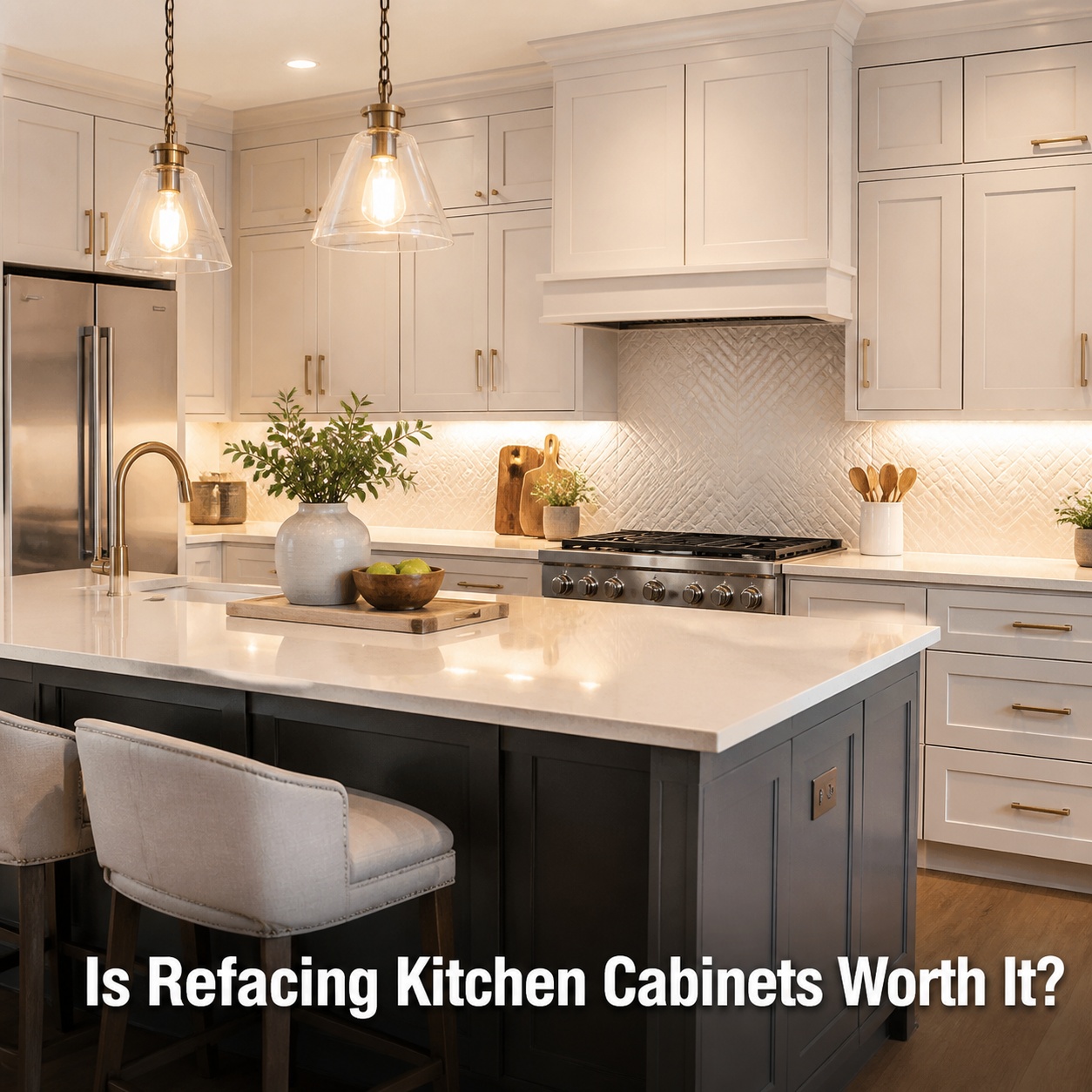
    Is Refacing Kitchen Cabinets Worth It?

    Renovating a kitchen is one of the biggest decisions a homeowner can make, and cabinets are almost always at the center of that conversation. They take up the most visual space, they affect how the kitchen functions daily, and they carry a significant portion of the renovation budget. So when someone discovers that cabinet refacing exists as an option, the immediate question is obvious: does it actually deliver real value, or is it just a shortcut that costs nearly as much as doing it right?

    The honest answer depends entirely on your specific situation. Cabinet refacing works beautifully for some kitchens and falls completely flat for others. Understanding the difference between a smart renovation decision and a costly mistake requires looking at the condition of your existing cabinets, your budget, your goals, and what you actually want the finished kitchen to look and feel like.

    This guide breaks down everything you need to know about cabinet refacing — what it involves, what it costs, when it makes sense, and when you should walk away from it entirely. If you are trying to decide between updating your kitchen on a budget or committing to a full replacement, the information here will help you make a confident, informed choice.

    What Cabinet Refacing Is and How It Works

    Cabinet refacing is the process of updating the visible surfaces of your existing kitchen cabinets without removing or replacing the cabinet boxes themselves. The structural framework stays in place, and new materials are applied over the exterior to give everything a fresh, updated appearance. It is a middle-ground option between painting your cabinets and tearing them out completely.

    Refacing vs. Replacing vs. Painting

    These three options represent very different levels of commitment, cost, and outcome. Painting is the most affordable route and works well when the cabinet doors are in decent shape and the style still works for the space. Refacing goes further by replacing the cabinet doors, drawer fronts, and applying new veneer or laminate to the cabinet frames. Full replacement means removing everything and starting from scratch with entirely new cabinet boxes, doors, and hardware.

    A detailed breakdown of cabinet refacing versus full replacement shows that the right choice often comes down to the structural integrity of your existing boxes and whether your current layout actually works for how you use the kitchen.

    Option Average Cost Range Time to Complete Best For
    Painting Low 2–5 days Tight budgets, good cabinet condition
    Refacing Moderate 3–7 days Sound boxes, layout satisfaction
    Full Replacement High 1–3 weeks Structural damage, layout changes

    Typical Materials and Process

    The refacing process starts with a professional measuring and assessing your existing cabinet boxes. New cabinet doors and drawer fronts are ordered to match your chosen style, and the exposed surfaces of the cabinet frames are covered with either wood veneer, laminate, or thermofoil. Cabinet hardware like hinges, handles, and pulls are replaced as part of the process.

    Wood veneer gives the most natural, high-end look and can be stained or finished to match almost any kitchen design. Laminate is more durable and moisture-resistant, making it a practical choice for busy kitchens. Thermofoil is a vinyl-based option that wraps around the cabinet surface and works well for modern, flat-panel styles. Each material has its own cost profile and longevity, so the choice matters.

    Costs, Time, and Value Considerations

    Cost is usually the first thing people want to understand, and for good reason. Cabinet refacing is typically positioned as the budget-friendly alternative to full replacement, but the actual numbers can surprise people who assume it will be dramatically cheaper.

    Upfront Cost Factors

    The total cost of cabinet refacing depends on the size of your kitchen, the materials you choose, and whether you hire a professional or attempt a DIY approach. Labor costs alone can represent a significant portion of the total bill, especially for larger kitchens with more cabinet doors and drawer fronts to replace.

    • Number of cabinet doors and drawer fronts
    • Material choice: wood veneer, laminate, or thermofoil
    • Cabinet hardware upgrades
    • Professional installation versus DIY
    • Condition of existing cabinet frames

    DIY refacing kits are available, but they require a reasonable level of skill and patience. Mistakes in cutting veneer or applying laminate can be difficult to fix and may end up costing more to correct than hiring a professional from the start.

    How Refacing Affects Home Value and ROI

    Return on investment for kitchen renovations is always a relevant consideration, especially if you plan to sell. Cabinet refacing can improve the appearance of your kitchen significantly, which does contribute to resale value and buyer appeal. However, it does not deliver the same return as a full kitchen remodel with new cabinets, countertops, and updated appliances.

    If you are renovating primarily to sell, understanding which kitchen cabinets offer the best value for the money can help you decide whether investing in new cabinets might actually deliver a stronger return than refacing your existing ones. Home value improvements from refacing are real but modest compared to full replacement with quality new cabinetry.

    When Refacing Makes Sense

    There are specific situations where cabinet refacing is genuinely the smartest choice. It is not a compromise in those cases — it is simply the right tool for the job.

    Cabinets That Are Structurally Sound

    Featured image

    The single most important factor is the condition of your existing cabinet boxes. If the frames are solid, the shelves are not sagging, the joints are tight, and there is no water damage or warping, then refacing makes complete sense. You are essentially getting new-looking kitchen cabinets without paying to replace infrastructure that still works perfectly.

    • No signs of water damage or mold inside the cabinet boxes
    • Shelves that are level and fully functional
    • Cabinet frames that are square and properly attached to the wall
    • No pest damage or structural compromise

    Solid cabinet boxes are the foundation of a successful refacing project. Without them, you are putting new materials on a failing structure, which is never a good investment.

    Best Situations for Budget-Conscious Renovations

    Refacing is an excellent option when your kitchen layout works well and you simply want a visual refresh. If you are happy with where everything is positioned — the sink, the appliances, the flow of the space — then there is no reason to pay for a full demolition and rebuild. Refacing lets you update the look without disrupting the entire kitchen renovation budget.

    It also works well when you are updating other elements of the kitchen at the same time. New countertops, a fresh backsplash, and updated cabinet hardware can transform a kitchen dramatically when combined with refaced cabinets. The total cost of that kind of kitchen renovation is significantly lower than full cabinet replacement, and the visual result can be just as impressive.

    When Refacing Is Not Worth It

    Refacing is not the right answer for every kitchen. There are clear situations where it will leave you disappointed, and recognizing those situations early saves both money and frustration.

    Damage, Layout Changes, or Storage Problems

    If your cabinet boxes have water damage, warped wood, or structural issues, refacing is not a solution — it is a cover-up. The new veneer and doors will look great initially, but the underlying problems will continue to worsen and eventually affect the new materials too. In those cases, replacement is the only responsible path forward.

    Layout problems are another dealbreaker. Refacing does not change where your cabinets are positioned, how tall they are, or how much storage they provide. If your kitchen feels cramped, lacks upper cabinet space, or has an awkward workflow, refacing will not fix any of that. You will spend money on a cosmetic update and still have a kitchen that does not function the way you need it to.

    • Visible water stains or soft spots inside cabinet boxes
    • Doors that do not close properly due to frame warping
    • Insufficient storage that requires adding new cabinet runs
    • A layout that needs to be reconfigured entirely

    Cases Where Replacement Is the Better Investment

    Sometimes the math simply does not work in favor of refacing. If your existing cabinets are low-quality to begin with, the cost of refacing them can approach the cost of replacing them with better-quality new cabinets. Understanding how cabinet grades affect quality and pricing helps clarify when replacement with a higher-grade cabinet actually makes more financial sense than refacing what you already have.

    Full replacement also makes sense when you want to significantly increase storage capacity, change the cabinet style dramatically, or upgrade to soft-close hardware and modern interior features that refacing simply cannot provide. New cabinets also come with warranties that refaced cabinets do not, which adds long-term value to the investment.

    If budget is the primary concern driving you toward refacing, it is worth exploring options like wholesale cabinets or ready-to-assemble options before assuming replacement is out of reach. Many homeowners are surprised to find that new cabinets can be more affordable than expected when purchased through the right channels.

    Conclusion

    Cabinet refacing is a legitimate, valuable option for the right kitchen in the right situation. It delivers a meaningful visual transformation at a lower cost than full replacement, and it makes excellent sense when your cabinet boxes are structurally sound and your layout works well. The key is being honest about what your kitchen actually needs rather than choosing refacing simply because it sounds like the cheaper path.

    If your cabinets are damaged, your layout needs to change, or the cost of refacing is creeping close to replacement territory, new cabinets are the smarter investment. The goal of any home improvement project is to get lasting value from what you spend, and that means matching the solution to the actual problem rather than defaulting to the option that sounds most affordable on the surface.

    FAQ

    How long does cabinet refacing last?

    Cabinet refacing typically lasts between ten and twenty years when done with quality materials and professional installation. Wood veneer and laminate hold up well under normal kitchen conditions, but thermofoil can peel over time, especially near heat sources like ovens and dishwashers. Proper care and avoiding excessive moisture will extend the life of refaced cabinets significantly.

    Is refacing cheaper than replacing kitchen cabinets?

    In most cases, yes — cabinet refacing costs less than full replacement. The savings come from keeping the existing cabinet boxes in place, which eliminates demolition, disposal, and the cost of new cabinet frames. However, the gap narrows when kitchens are large or when premium refacing materials are chosen. For homeowners exploring cost-effective new cabinet options, comparing wholesale cabinets against big box store pricing can reveal that replacement is sometimes more competitive than expected.

    Can you reface cabinets yourself?

    DIY cabinet refacing is possible, and kits are available that include veneer, adhesive, and new cabinet doors. The process requires careful measurement, clean surface preparation, and patience with the application. Mistakes are difficult to reverse, and poorly applied veneer can bubble, peel, or look uneven. For most homeowners, professional installation produces a cleaner result and is worth the added labor cost.

  • Kitchen Cabinet Refacing vs Replacement: Which Wins?

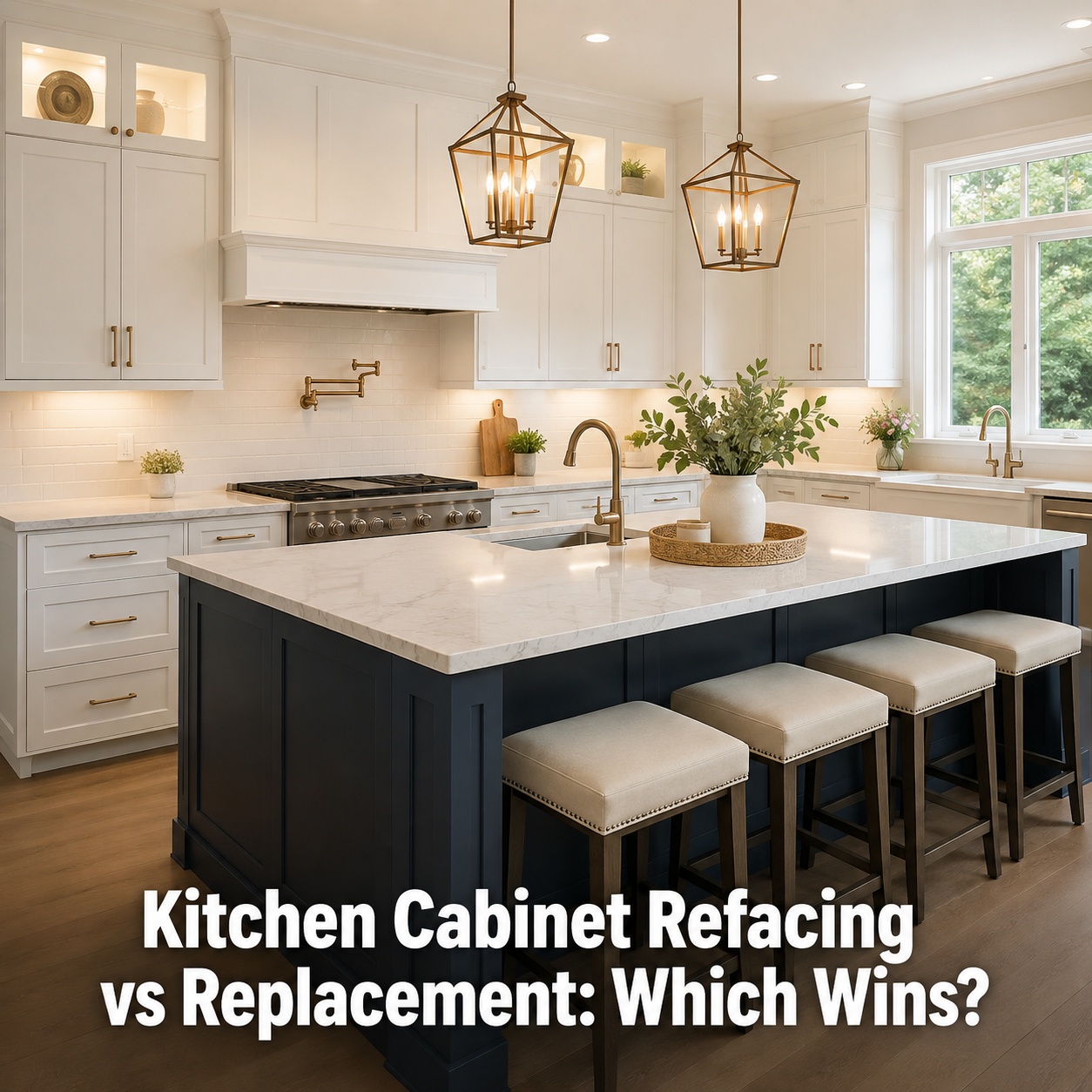
    Kitchen Cabinet Refacing vs Replacement: Which Wins?

    Your kitchen cabinets take up more visual real estate than almost anything else in the room. They set the tone, define the style, and quietly communicate whether your kitchen feels dated or fresh. So when they start looking worn, the big question becomes: do you reface what you have, or tear everything out and start over?

    Both options have real merit, and neither is universally better. The right choice depends on your budget, your goals, the condition of your existing cabinet boxes, and how dramatically you want to transform the space. This article breaks down every major factor so you can make a confident, informed decision without second-guessing yourself halfway through a renovation.

    Understanding the difference between refacing and full cabinet replacement goes beyond just cost. It touches on design flexibility, structural integrity, environmental impact, and long-term home value. By the end of this guide, you will know exactly which path makes sense for your kitchen and your situation.

    Overview of Kitchen Cabinet Refacing vs Replacement

    Before comparing the two options side by side, it helps to understand what each process actually involves. Many homeowners assume refacing is just a cosmetic patch job, while replacement is always the superior choice. Neither assumption is entirely accurate.

    What Cabinet Refacing Involves

    Cabinet refacing is the process of updating the visible surfaces of your existing kitchen cabinets without removing the cabinet boxes from the wall. The cabinet frames stay in place, and new cabinet doors, drawer fronts, and veneer or laminate are applied over the existing surfaces.

    The core structure of your cabinets remains untouched. A professional installer will strip the old doors and hardware, apply a thin layer of veneer or laminate to the cabinet frames, and install brand-new cabinet doors and drawer fronts that match your chosen style. New cabinet hardware is typically added as a finishing touch.

    This process is significantly less invasive than a full kitchen remodel. Your kitchen remains partially functional throughout the project, and the timeline is considerably shorter.

    What Full Cabinet Replacement Involves

    Full cabinet replacement means removing every existing cabinet from the kitchen, including the cabinet boxes, doors, frames, and all associated hardware. Everything is stripped back to the walls, and entirely new kitchen cabinets are installed from scratch.

    This approach gives you a completely blank slate. You can reconfigure your kitchen layout, change cabinet dimensions, add features like pull-out shelves or built-in organizers, and choose from a much wider range of cabinet styles and materials, including solid wood, plywood, or MDF construction.

    Replacement is a larger investment in every sense, requiring more labor, more materials, and more time. But it also delivers a more comprehensive transformation that can address structural problems, outdated layouts, and storage limitations that refacing simply cannot fix.

    Key Differences at a Glance

    Factor Cabinet Refacing Full Cabinet Replacement
    Cost Lower upfront cost Higher upfront cost
    Timeline Two to five days One to three weeks
    Layout Changes Not possible Fully customizable
    Structural Fix No Yes
    Material Options Limited to veneer or laminate Solid wood, plywood, MDF, and more
    Disruption Level Minimal Significant
    Environmental Impact Lower waste Higher material waste

    Feature-by-Feature Comparison

    Now that you have a broad picture, it is time to get specific. Each of these categories can tip the decision one way or the other depending on your priorities.

    Appearance, Design Flexibility, and Style Options

    Refacing can produce a genuinely impressive visual transformation. New cabinet doors, fresh veneer, and updated cabinet hardware can make a kitchen look completely different without touching the underlying structure. You can choose from a wide range of door profiles, finishes, and colors.

    However, refacing has limits. The cabinet boxes remain the same size and configuration, so your design options are constrained by what already exists. If your current cabinets are a style that no longer works with modern kitchen aesthetics, refacing may feel like putting new clothes on an old frame.

    Full replacement opens up every design possibility. You can choose any cabinet style, any material, any finish, and any configuration. If you have been eyeing a specific look, like shaker-style solid wood cabinets or high-gloss MDF fronts, replacement gives you complete creative freedom. For homeowners researching value-driven cabinet options, understanding what is available at different price points can help clarify whether replacement is worth the extra investment.

    Durability, Longevity, and Structural Integrity

    The cabinet lifespan of a refaced kitchen depends heavily on the condition of the existing cabinet boxes before the work begins. If the frames are solid, made from quality plywood or solid wood, and show no signs of water damage or warping, refacing can extend their useful life by many years.

    Refacing does not fix structural problems. If your cabinet frames are soft, swollen, or compromised by moisture, applying new veneer over them is a temporary solution at best. The underlying damage will continue to worsen regardless of how good the new surfaces look.

    Full replacement gives you the opportunity to install cabinets built from superior materials from the ground up. Understanding the differences in construction quality, such as plywood versus particleboard cabinet boxes, matters enormously here. A quick look at how cabinet grades are defined can help you choose replacement cabinets that will genuinely outlast your current ones rather than just looking better for a few years.

    Project Timeline, Disruption, and Installation Process

    Refacing is fast. A professional installation team can typically complete a standard kitchen in two to five days. Your kitchen remains partially usable throughout the process, which makes daily life significantly less disruptive.

    Full cabinet replacement is a much larger undertaking. Demolition alone can take a full day. Once the old cabinets are removed, walls may need patching, plumbing or electrical adjustments might be required, and the new professional installation process can take anywhere from one to three weeks depending on kitchen size and complexity.

    If you are living in your home during the renovation, the disruption of a full replacement is real and worth factoring into your decision. Families with young children or anyone who relies heavily on their kitchen will feel the impact of an extended project timeline.

    Impact on Kitchen Layout, Function, and Storage

    This is one of the clearest differentiators between the two options. Refacing preserves your existing kitchen layout exactly as it is. If your current storage is inefficient, your cabinet sizes are awkward, or your kitchen flow does not work well, refacing will not solve any of those problems.

    Replacement allows you to redesign the entire kitchen layout. You can add taller upper cabinets to maximize vertical storage, install deeper base cabinets, incorporate pull-out drawers, or reconfigure the entire footprint of the kitchen. This level of functional improvement simply is not possible with refacing.

    For homeowners who are frustrated with their kitchen’s storage capacity or workflow, replacement is the only option that actually addresses the root cause. Cosmetic updates through refacing will leave those functional frustrations in place.

    Environmental Impact and Material Waste

    Refacing is the more eco-friendly option by a significant margin. Because the existing cabinet boxes stay in place, you are not sending large volumes of wood and composite materials to a landfill. The amount of new material required is substantially lower, which reduces both waste and the environmental cost of manufacturing.

    Full replacement generates considerable material waste. Old cabinet boxes, doors, frames, and hardware all need to be disposed of, and entirely new materials must be manufactured and transported to replace them. If environmental impact is a priority for you, refacing aligns better with eco-friendly renovation values.

    That said, some replacement projects use sustainably sourced materials or recycle old cabinets through donation programs, which can offset some of the environmental cost. It is worth exploring those options if you decide replacement is the right path.

    Cost and Value: Refacing vs Replacement

    Cost is usually the first thing homeowners ask about, and for good reason. The financial difference between these two options is substantial.

    Typical Price Ranges and What Affects the Cost

    Cabinet refacing typically costs significantly less than full replacement. The exact price depends on kitchen size, the materials chosen for the new veneer and cabinet doors, and local labor costs. Kitchens with more cabinet doors and drawer fronts will naturally cost more to reface.

    Full cabinet replacement costs more because it involves demolition, disposal of old materials, new cabinet boxes, new cabinet doors, new hardware, and professional installation. The price range varies widely based on cabinet quality, whether you choose stock, semi-custom, or custom cabinets, and the complexity of the installation.

    • Cabinet refacing: Typically ranges from thirty to fifty percent of full replacement cost
    • Stock cabinet replacement: Most budget-friendly full replacement option
    • Semi-custom replacement: Mid-range with more design flexibility
    • Custom cabinet replacement: Highest cost, maximum design control
    • DIY refacing kits: Available but require skill and patience to execute well

    Labor costs represent a significant portion of both projects. Professional installation ensures a quality result, but it adds to the overall budget. Some homeowners explore DIY refacing to reduce costs, though the results vary considerably based on skill level.

    Short-Term Savings vs Long-Term Investment

    Refacing delivers clear short-term savings. You spend less upfront and get a refreshed kitchen relatively quickly. For homeowners on a tight budget who have structurally sound cabinet boxes, refacing offers excellent value for the money spent.

    Featured image

    However, if your cabinet boxes are aging or made from lower-quality materials, refacing may only delay an inevitable replacement. Spending money on refacing now and then replacing everything a few years later ends up costing more in total than simply replacing everything once.

    Replacement is a longer-term investment that, when done with quality materials, can serve your kitchen for decades. The higher upfront cost is offset by the extended lifespan and the functional improvements that come with a completely new installation.

    Return on Investment and Home Resale Appeal

    Both options can improve home value, but they do so differently. Cabinet refacing improves the visual appeal of your kitchen without a major financial outlay, which can make your home more attractive to buyers without dramatically increasing your asking price.

    Full cabinet replacement, particularly with quality materials and a modern design, can meaningfully increase home value and return on investment. Buyers notice new kitchens, and updated kitchen cabinets are consistently cited as one of the most impactful renovation choices for resale appeal.

    The ROI on replacement depends heavily on the quality of cabinets chosen and how well they align with buyer expectations in your market. Choosing cabinets that are appropriate for your home’s price range matters. Overspending on ultra-premium cabinets in a modest home rarely returns full value at resale.

    Best Use Cases and Decision Guide

    Knowing the facts is one thing. Knowing how to apply them to your specific situation is another. Here is a practical guide to help you decide.

    When Refacing Makes the Most Sense

    Refacing is the right choice under specific conditions. If your existing cabinet boxes are structurally sound, made from solid plywood or solid wood, and show no signs of water damage, warping, or deterioration, they are excellent candidates for refacing.

    • Your kitchen layout works well and you have no desire to change it
    • Your budget is limited and you need a cost-effective refresh
    • You want minimal disruption and a fast turnaround
    • Your cabinet frames are in genuinely good condition
    • You are updating the kitchen before selling and want strong visual impact without major expense
    • Reducing material waste is a priority for you

    Refacing also pairs well with other surface updates like new kitchen countertops or fresh paint, creating a cohesive kitchen renovation without the cost of full replacement.

    When Full Replacement Is the Better Choice

    Replacement becomes the clear winner in several scenarios. If your cabinet boxes are damaged, poorly constructed, or made from low-quality particleboard that has begun to deteriorate, no amount of refacing will fix the underlying problem.

    • Your kitchen layout is inefficient and needs reconfiguring
    • Cabinet boxes show water damage, warping, or structural weakness
    • You want to significantly increase storage capacity or add new features
    • Your current cabinets are very old and nearing the end of their useful life
    • You are doing a full kitchen remodel and want everything to be new
    • You want maximum design flexibility and access to all cabinet styles

    Homeowners comparing ready-to-assemble versus pre-assembled cabinet options for a replacement project will find that both can deliver excellent results depending on budget and installation preference. Understanding those distinctions helps you make a smarter purchasing decision once you commit to replacement.

    Key Questions to Help You Choose

    Ask yourself these questions before making a final decision. Your answers will point you clearly in one direction.

    • Are my existing cabinet boxes structurally sound with no water damage or warping?
    • Am I satisfied with my current kitchen layout and storage configuration?
    • What is my realistic budget for this project?
    • How long do I plan to stay in this home?
    • Is minimizing disruption to my daily routine a priority?
    • Do I want to change the overall footprint or configuration of my kitchen?
    • How important is environmental impact to my renovation decisions?

    If most of your answers point toward preserving what you have and refreshing the appearance, refacing is your answer. If your answers reveal structural problems, layout frustrations, or a desire for complete transformation, replacement is the smarter long-term choice.

    Conclusion

    Neither refacing nor replacement is universally superior. Refacing wins on cost, speed, and environmental impact when your cabinet boxes are in good shape and your layout works. Replacement wins on design freedom, structural improvement, and long-term value when your existing cabinets have run their course.

    The best decision is the one that matches your actual situation, not just your budget or your aesthetic preferences in isolation. Assess your cabinet boxes honestly, define your goals clearly, and choose the path that delivers the most value for your specific kitchen and your specific life.

    FAQ

    Is cabinet refacing as durable as replacing cabinets?

    Refacing can be highly durable if the existing cabinet boxes are in good structural condition. The new veneer, cabinet doors, and hardware applied during refacing are built to last. However, if the underlying cabinet frames are compromised by moisture or age, refacing will not prevent further deterioration. The durability of a refaced kitchen is ultimately tied to the quality of the existing structure beneath the new surfaces.

    Can I change my kitchen layout if I only reface my cabinets?

    No. Cabinet refacing preserves the existing kitchen layout exactly as it is. The cabinet boxes remain fixed to the walls in their current positions, so there is no opportunity to reconfigure storage, change cabinet dimensions, or alter the kitchen’s footprint. If changing your kitchen layout is a goal, full cabinet replacement is the only option that makes it possible.

    How do I know if my existing cabinets are good candidates for refacing?

    Start by inspecting the cabinet boxes carefully. Press on the surfaces and check for softness, which indicates moisture damage. Look for warping, swelling, or visible deterioration along the bottom of base cabinets where water exposure is most common. Open every door and drawer to check that the frames are square and the hardware functions properly. If the boxes are solid, stable, and free from damage, they are strong candidates for refacing. Homeowners who want to understand what quality cabinet construction looks like before making this assessment can explore what separates quality cabinets from lower-grade options to better evaluate what they currently have.

  • Best Kitchen Cabinets for the Money: Our Top Picks

    Best Kitchen Cabinets for the Money: Our Top Picks

    Upgrading your kitchen cabinets is one of the smartest investments you can make in your home. Cabinets cover more visual surface area than almost anything else in the kitchen, and they directly affect how the space functions every single day. Getting the right ones without overspending takes research, and that is exactly what this guide is built to help you do.

    This guide is written for homeowners planning a kitchen remodel on a realistic budget, DIYers who want to handle installation themselves, and anyone flipping a property or updating a rental. You do not need to spend a fortune to get kitchen cabinets that look sharp, hold up well, and add genuine resale value. You just need to know what to look for and where the real trade-offs are.

    Cabinet quality affects everything from how smoothly your drawers open to how your kitchen photographs when you list your home. The right cabinet budget, materials, construction method, and finish choices all work together. This guide breaks down each factor clearly so you can make a confident, informed decision.

    Key Factors That Make Kitchen Cabinets a Good Value

    Value is not just about the lowest price. It is about what you get for every dollar spent. A cheap cabinet that warps, chips, or falls apart within a few years costs more in the long run than a mid-range option built to last. Understanding the difference starts with knowing what separates quality cabinets from budget traps.

    Factor Budget Cabinets Mid-Range Cabinets High-End Cabinets
    Box Material Particleboard Plywood or MDF Solid plywood or solid wood
    Drawer Glides Basic side-mount Soft-close undermount Full-extension soft-close
    Door Style Slab or basic shaker Shaker or raised panel Custom profiles
    Finish Durability Thermofoil or basic paint Painted or stained wood Catalyzed lacquer or hand-applied
    Warranty Limited or none 1 to 5 years Lifetime

    Materials and Construction Quality

    The box is the backbone of any cabinet. Plywood construction is widely considered the gold standard for cabinet boxes because it holds screws well, resists moisture, and does not sag under heavy loads. Particleboard is cheaper and heavier, but it swells when exposed to water and does not grip fasteners as reliably over time.

    MDF falls somewhere in between. It machines cleanly and takes paint beautifully, which is why it is commonly used for cabinet doors and drawer fronts. However, MDF is not ideal for cabinet boxes in humid environments. If you want to understand how these materials are graded and what that means for long-term performance, the breakdown in this guide to cabinet grades and quality standards is worth reading before you shop.

    Joinery matters just as much as material. Dovetail joints in drawer boxes signal quality craftsmanship and durability. Stapled or glued joints are faster to produce but tend to loosen over time. Back panels should be at least a quarter inch thick to keep the cabinet square and stable.

    Hardware and Functional Features

    Soft-close hinges and drawer glides are no longer luxury features. They are now a baseline expectation in mid-range and even many budget cabinet lines. Soft-close mechanisms reduce wear on cabinet doors and drawers, and they make the kitchen feel noticeably more refined.

    Full-extension drawers are a practical upgrade worth prioritizing. They allow you to access the full depth of the drawer without digging around in the back. Cabinet storage solutions like pull-out trays, spice racks, and trash pull-outs add real daily convenience and help justify a slightly higher upfront cost.

    • Soft-close hinges reduce door slamming and long-term hinge wear
    • Undermount drawer glides are smoother and easier to clean than side-mount
    • Pull-out shelves maximize corner and base cabinet storage
    • Built-in trash pull-outs keep counters cleaner and kitchens more organized

    Finish, Style, and Durability

    Painted cabinet finishes offer a clean, modern look and come in a wide range of cabinet colors. The trade-off is that painted surfaces can chip or show wear at edges and corners over time, especially in high-traffic kitchens. Stained wood finishes tend to age more gracefully because minor scratches blend into the natural grain.

    Shaker cabinets remain the most popular door style across all price points because they work with both traditional and contemporary kitchen layouts. Slab doors cost less to produce and suit modern or minimalist designs. Raised panel doors add visual depth but typically come at a higher price. The door style you choose will affect both the look and the total cost of your project significantly.

    Total Cost of Ownership

    The sticker price is only part of the equation. Installation, shipping, and hardware all add to your total spend. Professional cabinet installation typically runs several thousand dollars depending on kitchen size and complexity. DIY assembly can save that money but requires time, tools, and patience.

    Factor in potential repairs too. A cabinet line with a strong warranty and accessible replacement parts is worth more than one that saves you a hundred dollars upfront but leaves you stranded when a door hinge fails. Always read the warranty terms before committing to any cabinet brand.

    Best Kitchen Cabinet Options for the Money

    Stock Cabinets: Most Affordable Ready-Made Choice

    Stock cabinets are pre-built in standard sizes and shipped ready to install. They are the fastest and most affordable option for a kitchen remodel on a tight timeline. Most stock lines come in a limited range of finishes, typically white, gray, or natural wood tones, and in fixed width increments.

    The trade-off is flexibility. If your kitchen layout does not align with standard dimensions, you will need filler strips to close gaps, which can affect the finished look. For straightforward kitchen layouts, though, stock cabinets deliver solid value.

    • Lowest upfront cost of any cabinet category
    • Available immediately at most home improvement stores
    • Limited size and finish options compared to semi-custom
    • Box construction is often particleboard at the entry level

    Semi-Custom Cabinets: Balance of Cost, Fit, and Style

    Semi-custom cabinets offer more flexibility than stock without the price tag of fully custom work. You can typically choose from a wider range of sizes, door styles, finishes, and interior configurations. This makes them a strong choice for kitchens with unusual dimensions or homeowners who want a more tailored look.

    The value proposition of semi-custom becomes clear when you compare the finished result to stock cabinets. Better fit means fewer fillers, cleaner lines, and a kitchen that looks more intentional. Lead times are longer than stock, usually several weeks, so plan accordingly.

    Ready-to-Assemble (RTA) Cabinets: DIY-Friendly Savings

    RTA cabinets ship flat-packed and require assembly before installation. The savings can be substantial, sometimes thirty to fifty percent less than comparable pre-assembled options. For a confident DIYer, this is one of the best ways to stretch a cabinet budget without sacrificing quality.

    Not all RTA cabinets are created equal. Quality cues include plywood box construction, dovetail drawer joints, soft-close hardware included as standard, and a finished interior. If you are weighing the pros and cons carefully, this comparison of RTA versus pre-assembled cabinets covers the real differences in quality, cost, and installation experience.

    • Significantly lower cost than pre-assembled equivalents
    • Easier to ship and handle in smaller spaces
    • Assembly requires time and basic tools
    • Quality varies widely between brands and product lines

    Big-Box Store vs Online Cabinet Brands

    Big-box stores like Home Depot and Lowe’s offer the convenience of in-store displays, design consultations, and easy returns. Their stock cabinet lines are accessible and familiar, but the selection is limited and pricing is rarely the most competitive. IKEA cabinets occupy a unique position here, offering a modular system with a strong following among budget remodelers and design-savvy homeowners.

    Online cabinet brands often provide better pricing, more customization, and higher construction quality for the same budget. The trade-off is that you cannot see or touch the product before it arrives. Reading reviews carefully and understanding the return policy is essential. For a direct comparison of pricing and quality, the breakdown of wholesale versus big-box store cabinets is a useful reference point.

    Best Value by Use Case

    For small kitchens and condos, stock or RTA cabinets in a simple shaker style offer the best return. The smaller footprint means lower total cost, and standard sizes usually fit without major adjustments.

    For rental properties and house flips, durability and appearance matter more than premium features. A painted shaker cabinet in white or gray with basic soft-close hardware hits the right balance of cost and appeal. For long-term family homes, investing in plywood construction, full-extension drawers, and a strong cabinet warranty pays off over years of daily use.

    User Experience and Real-World Performance

    Ease of Shopping, Design, and Ordering

    In-store design services at big-box retailers can be helpful for first-time buyers who want guided support. Online cabinet brands increasingly offer sophisticated design tools that let you build a virtual kitchen layout before ordering. Both approaches have merit depending on your comfort level.

    Featured image

    Lead times vary significantly. Stock cabinets are available same-day or within a week. Semi-custom and online orders can take several weeks. Order accuracy is a common pain point with online purchases, so double-check every item on your order confirmation before it ships.

    Installation and DIY Friendliness

    Professional cabinet installation ensures a clean result but adds meaningful cost to your project. A skilled installer handles leveling, scribing, and alignment issues that can trip up first-time DIYers. For RTA cabinets especially, the assembly and installation process requires patience and attention to detail.

    Common problems during DIY installation include misaligned doors, cabinets that are not perfectly level, and missing or damaged parts. Always inspect every box and door panel before beginning installation so you can request replacements without delaying your project.

    Everyday Use, Maintenance, and Longevity

    Budget-friendly cabinets can hold up well with proper care. Wiping down surfaces regularly with a damp cloth and mild cleaner prevents grease buildup that degrades finishes over time. Avoid harsh abrasives on painted surfaces, as they accelerate chipping and dulling.

    Minor nicks and scratches on painted cabinets can be touched up with matching paint from the manufacturer. Water damage near the sink is the most common long-term issue with particleboard boxes. Keeping the area around the sink dry and well-sealed extends cabinet life considerably.

    Real Customer Feedback and Common Complaints

    Customers who are happy with their cabinet purchases most often cite value for money, the visual impact of the finished kitchen, and improved storage organization. Shaker-style cabinets in particular receive consistent praise for their clean, versatile appearance.

    Common complaints center on finish chipping at door edges, alignment issues that develop over time, and hardware that feels flimsy compared to the cabinet itself. Upgrading the pulls and knobs after purchase is an easy and affordable way to address the hardware concern without returning the entire order.

    Alternatives and Buying Advice

    Cabinet Refacing and Repainting as Budget Alternatives

    If your existing cabinet boxes are structurally sound, refacing is worth serious consideration. Cabinet refacing involves replacing the doors and drawer fronts while keeping the existing boxes in place. It costs significantly less than full replacement and can dramatically change the look of your kitchen.

    Repainting existing cabinets is the most budget-friendly option of all. The results depend heavily on proper preparation, including cleaning, sanding, priming, and using the right paint. Poorly executed repaints chip and peel quickly, so this approach rewards patience and attention to process.

    Mix-and-Match Strategies to Stretch Your Budget

    One of the smartest moves in a budget kitchen remodel is combining stock or RTA cabinet boxes with upgraded doors and hardware. The box is hidden most of the time, so spending less there and more on visible elements like door style and pulls delivers better visual results per dollar.

    Reducing the number of upper cabinets and replacing some with open shelving is another effective strategy. Open shelves cost a fraction of enclosed cabinets and can make a small kitchen feel larger and more modern. This approach works especially well in kitchens where storage needs are modest.

    How to Evaluate Cabinet Quality in the Store or Online

    In a showroom, open and close every door and drawer. Soft-close action should feel smooth and controlled, not sluggish or abrupt. Check that doors hang straight and gaps are even. Pull a drawer all the way out and look at the joinery on the drawer box. Dovetail joints are a reliable quality indicator.

    When shopping online, look for these specifications in product descriptions:

    • Plywood box construction rather than particleboard
    • Soft-close hinges and drawer glides included as standard
    • Finished interior surfaces, not raw particleboard
    • Dovetail or dowel drawer box construction
    • Clear warranty terms with accessible customer support

    Smart Buying Tips to Get the Best Value

    Cabinet sales happen regularly at both big-box stores and online retailers. Timing your purchase around promotional periods can save ten to twenty percent on a full kitchen order. Sign up for email lists from brands you are considering so you do not miss limited-time offers.

    Always get multiple quotes before committing. Compare not just price but also what is included, such as hardware, delivery, and installation support. A slightly higher quote that includes soft-close hardware and free shipping may be the better deal overall. Read cabinet reviews from verified buyers and pay attention to comments about packaging quality and customer service responsiveness.

    Conclusion

    Getting the best kitchen cabinets for your money means finding the right balance between upfront cost, construction quality, and long-term durability. It does not mean buying the cheapest option available. It means understanding what you are paying for and making sure every dollar is working toward a result you will be happy with for years.

    Stock cabinets suit tight budgets and straightforward layouts. RTA cabinets offer excellent value for confident DIYers willing to invest time in assembly. Semi-custom cabinets are the right call when fit and style matter more and the budget allows a bit more flexibility. For anyone questioning whether online or wholesale options can match big-box quality, the honest answer is that they often exceed it at a lower price point, as explored in this look at whether wholesale cabinets are actually good quality.

    Prioritize plywood construction, soft-close hardware, and a solid warranty regardless of which category you shop. Those three factors do more to protect your investment than any other single decision. Style and color matter, but structure and durability are what you will notice every day.

    FAQ

    Are budget kitchen cabinets durable enough for everyday family use?

    Yes, with the right choices. Budget cabinets built with plywood boxes, soft-close hardware, and quality finishes can handle daily family use reliably. The key is avoiding the lowest-tier particleboard options and focusing on construction quality over decorative features. Proper installation and regular maintenance extend the life of any cabinet significantly.

    Is it cheaper to refinish my existing cabinets or buy new ones?

    Refinishing is almost always cheaper than full replacement if your existing boxes are in good structural condition. Repainting can cost a few hundred dollars in materials for a DIY project. Professional cabinet refacing costs more but still comes in well below the price of new cabinets and installation. If the boxes are damaged, warped, or poorly built, replacement is the smarter long-term investment.

    What features should I never compromise on when buying budget cabinets?

    Plywood box construction, soft-close hinges and drawer glides, and a finished interior are the three features worth protecting in any budget. These directly affect how the cabinets function and how long they last. Cabinet colors, door profiles, and decorative hardware can all be adjusted or upgraded later, but the structural foundation of the cabinet box is not something you can fix after installation.

  • Kitchen Cabinet Grades Explained: What You Need to Know

    Kitchen Cabinet Grades Explained: What You Need to Know

    Understanding cabinet grades is one of the most practical skills you can develop before starting a kitchen remodel. Most homeowners walk into a showroom or browse online and immediately get overwhelmed by terms like “premium construction,” “solid wood,” and “professional grade” — without any clear way to compare what those phrases actually mean. The result is often overspending on features you do not need or underspending on quality that will cost you more in repairs later.

    Cabinet grades are not a perfect science, but they do give you a reliable framework for evaluating what you are buying. From the materials inside the cabinet box to the type of joinery holding it together, every detail contributes to how long your cabinets will last and how well they will perform under daily use. If you are planning a kitchen remodel, understanding these grades before you shop will save you time, money, and frustration.

    This guide breaks down everything you need to know about kitchen cabinet grades in plain language. You will learn how grades are classified, how to compare options side by side, and how to choose the right grade for your specific project and budget.

    What Kitchen Cabinet Grades Mean

    Cabinet grades are a way of categorizing kitchen cabinets based on their construction quality, materials, and manufacturing standards. They are not always assigned by a single universal authority, which is part of what makes shopping confusing. However, most industry professionals and retailers use a consistent set of criteria to separate lower-grade from higher-grade products.

    How cabinet grades are classified

    The most common classification system divides cabinets into three broad tiers: stock cabinets, semi-custom cabinets, and custom cabinets. Each tier reflects a different level of material quality, construction detail, and price point.

    Cabinet Grade Construction Type Typical Materials Price Range
    Stock Pre-built, fixed sizes Particleboard, MDF Lowest
    Semi-Custom Modified sizing options Plywood, MDF blend Mid-range
    Custom Built to specification Solid wood, plywood Highest

    Beyond these tiers, cabinet construction style also plays a role. Face frame cabinets have a solid wood frame attached to the front of the cabinet box, while frameless cabinets use a full-access design with no front frame. Both styles can appear across all grade levels, but frameless cabinets are more common in higher-end European-style kitchens.

    What grade labels do and do not guarantee

    Grade labels give you a starting point, but they do not guarantee quality on their own. A cabinet marketed as “premium” may still use particleboard in the box construction while only featuring solid wood doors. That distinction matters enormously for long-term cabinet durability.

    One reliable benchmark is the KCMA Standards certification, which stands for the Kitchen Cabinet Manufacturers Association. Cabinets that meet KCMA Standards have passed structural and finish tests that simulate years of real-world use. Always look for this certification when evaluating mid-range and higher-grade products.

    Grade labels also do not account for installation quality, which can make even a well-built cabinet perform poorly if done incorrectly.

    How to Compare Cabinet Grades Step by Step

    Comparing cabinet grades requires looking beyond the surface finish and door style. The real quality differences are usually hidden inside the cabinet box and in the details of how components are joined together.

    Check materials and box construction

    The cabinet box is the structural foundation of every kitchen cabinet. It is what holds the weight of your dishes, appliances, and daily use. Box construction materials fall into three main categories: plywood, MDF (Medium Density Fiberboard), and particleboard.

    • Plywood is the strongest and most moisture-resistant option for cabinet boxes
    • MDF offers a smooth surface ideal for painted finishes but is heavier and less water-resistant
    • Particleboard is the least expensive and least durable, prone to swelling when exposed to moisture

    If you are comparing ready-to-assemble versus pre-assembled cabinet options, pay close attention to whether the box uses plywood or particleboard, since this single factor often explains significant price differences between otherwise similar-looking products.

    Review door style, finishes, and hardware

    Cabinet door styles range from simple flat-panel designs to raised-panel and shaker styles. The door material matters as much as the style. Solid wood doors are the most durable and can be refinished, while MDF doors painted with a factory finish are more affordable and resist warping in stable environments.

    Cabinet finish quality is another key differentiator. Higher-grade cabinets typically use a catalyzed or conversion varnish finish that is harder and more resistant to scratches and moisture than standard paint or stain. Run your hand across the surface and look for consistency in sheen, color, and texture.

    Cabinet hardware, including soft close hinges and drawer slides, is often where budget cabinets cut corners. Soft close hinges should feel smooth and controlled, not loose or wobbly. Full-extension drawer slides that hold weight without flexing are a sign of better-grade construction.

    Compare joinery, durability, and warranty details

    Joinery refers to how the parts of a cabinet are connected. Dovetail joints are the gold standard for drawer boxes because they interlock mechanically and resist pulling apart under load. Stapled or glued joints are common in lower-grade cabinets and tend to fail faster under heavy use.

    Cabinet durability is directly tied to joinery quality. Ask manufacturers or retailers specifically how drawer boxes are constructed and whether the cabinet box uses dado joints or simple butt joints with staples.

    • Dovetail joints: strongest, found in higher-grade cabinets
    • Dado joints: solid mid-range option for box construction
    • Stapled butt joints: common in stock and budget cabinets

    Cabinet warranty terms reveal a lot about manufacturer confidence. A limited lifetime warranty on the cabinet box and a separate warranty on finish and hardware is standard for quality brands. Short warranties or warranties with many exclusions are a red flag.

    Choosing the Right Grade for Your Project

    Not every kitchen needs custom cabinets, and not every budget kitchen needs to sacrifice quality. The right grade depends on how you use your kitchen, how long you plan to stay in your home, and what your total remodel budget allows.

    Best options for budget, midrange, and premium kitchens

    Budget kitchens benefit most from stock cabinets with plywood box construction. Avoiding particleboard at this price point is the single most important upgrade you can make. Many wholesale suppliers offer plywood-box stock cabinets at prices that compete with big-box store particleboard options, and understanding the difference between wholesale and big-box store cabinets can help you stretch your budget further without sacrificing structural quality.

    Featured image

    Midrange kitchens are well served by semi-custom cabinets with plywood boxes, soft close hinges, and dovetail drawer construction. This tier offers the best balance of quality and cost for most homeowners.

    Premium kitchens justify custom cabinets built from solid wood with full plywood construction, premium hardware, and specialty finishes. These are built to last decades and can significantly increase home resale value.

    How to match cabinet grade to usage and timeline

    A rental property kitchen has different needs than a forever home. For rental or short-term use, stock cabinets with durable finishes and simple hardware make practical sense. For a primary residence where you cook daily, investing in at least mid-grade construction pays off in reduced maintenance and longer lifespan.

    • Rental or flip properties: stock cabinets with plywood boxes
    • Primary residence, moderate use: semi-custom with plywood and soft close hardware
    • High-use family kitchen: semi-custom or custom with dovetail drawers and solid wood doors
    • Luxury or forever home: full custom with premium materials throughout

    Timeline also matters. Stock cabinets ship quickly, while custom cabinets can take weeks or months. If your remodel has a tight schedule, semi-custom options often offer the best compromise between quality and lead time.

    Practical buying tips for homeowners and remodelers

    Request physical samples before committing to any cabinet order. Photos and showroom displays rarely capture the true weight, finish texture, or construction quality of a cabinet. Hold a sample door, open a drawer, and check how the hinges feel.

    Always ask for the cabinet specification sheet, which lists box material, finish type, joinery method, and hardware brand. Reputable suppliers provide this without hesitation. If a supplier cannot or will not share specifications, that is a warning sign worth taking seriously.

    Compare cabinet cost per linear foot rather than per unit. This gives you a more accurate picture of total project cost and makes it easier to compare quotes from different suppliers.

    Common Problems and Troubleshooting

    Even well-researched purchases can run into problems. Knowing what to watch for during shopping, delivery, and installation helps you catch issues before they become expensive mistakes.

    Spotting misleading marketing claims

    “All-wood construction” is one of the most misused phrases in cabinet marketing. It technically includes MDF and particleboard, since both are wood-based products. What you actually want is solid wood or plywood construction, and you need to ask specifically for those terms.

    Watch for vague claims like “premium grade” or “professional quality” without supporting specifications. Legitimate quality claims are backed by KCMA Standards certification, specific material callouts, and verifiable warranty terms. If you are unsure whether a supplier’s quality claims hold up, reading an honest assessment of wholesale cabinet quality can give you a useful baseline for comparison.

    Fixing fit, finish, and installation issues

    Minor finish imperfections like small chips or uneven sheen can often be addressed with touch-up kits provided by the manufacturer. More significant issues like warped doors or misaligned hinges usually indicate a manufacturing defect and should be reported immediately for replacement.

    Cabinet installation problems are common even with quality products. Out-of-level walls and floors cause doors to hang unevenly and drawers to stick. A skilled installer will shim and level each cabinet before securing it, ensuring proper alignment throughout the run.

    • Uneven door gaps: adjust hinge screws or re-level the cabinet
    • Drawer sticking: check slide alignment and tighten mounting screws
    • Finish peeling near sink: likely moisture exposure, reseal edges and improve ventilation

    When to repair, replace, or upgrade

    Cabinet boxes in good structural condition with damaged doors or hardware are strong candidates for refacing rather than full replacement. New cabinet door styles, wood veneer panels, and updated hardware can transform the look of a kitchen at a fraction of full replacement cost.

    Replace cabinets when the box itself is compromised — swollen particleboard, broken joints, or structural failure that cannot be repaired. Upgrading makes sense when your current cabinets no longer meet your storage needs or when a full kitchen remodel is already underway.

    Conclusion

    Cabinet grades give you a practical framework for making smarter purchasing decisions. The key is looking past marketing language and focusing on the specifics: box material, joinery type, finish quality, hardware performance, and warranty terms. Whether you are working with a tight budget or planning a high-end renovation, matching the right grade to your actual needs will always deliver better results than simply buying the most expensive option available.

    FAQ

    What is the difference between stock, semi-custom, and custom cabinets?

    Stock cabinets are pre-built in fixed sizes and are the most affordable option. Semi-custom cabinets offer more sizing flexibility and finish options at a moderate price increase. Custom cabinets are built entirely to your specifications using premium materials, offering the highest quality and the longest lead times.

    Are higher cabinet grades always worth the extra cost?

    Not always. For short-term use or rental properties, mid-grade stock cabinets with plywood boxes often provide the best value. Higher grades make the most sense for primary residences with heavy daily use, where the investment in cabinet durability pays off over many years.

    How can I tell if a cabinet is well made?

    Check the box material — plywood is better than particleboard. Open and close drawers to feel the slide quality. Look for dovetail joints on drawer boxes. Ask for the specification sheet and verify KCMA Standards certification. A well-made cabinet feels solid, operates smoothly, and comes with clear, comprehensive warranty documentation.

  • RTA Cabinets vs Assembled Cabinets: Which Is Better?

    RTA Cabinets vs Assembled Cabinets: Which Is Better?

    Choosing the right cabinets for your kitchen renovation is one of the most consequential decisions you’ll make during the entire project. The cabinets set the tone for the space, affect how functional your kitchen feels every single day, and represent a significant portion of your total remodel budget. Getting this decision wrong can cost you thousands of dollars and weeks of frustration.

    The debate between RTA cabinets and assembled cabinets has been going on for years, and for good reason. Both options have genuine strengths, and neither is universally better for every situation. The right choice depends on your budget, your skill level, your timeline, and what you actually want out of your kitchen cabinets long-term.

    This guide breaks down every meaningful difference between the two cabinet types so you can make a confident, informed decision. From cabinet quality and construction to shipping cost, installation process, and total cost of ownership, everything is covered here in plain language.

    Overview Of RTA Cabinets Vs Assembled Cabinets

    What Are RTA Cabinets?

    RTA cabinets, short for ready-to-assemble cabinets, are shipped flat-packed in boxes and require the buyer to put them together before installation. The cabinet boxes, doors, shelves, and hardware all arrive separately and are assembled on-site using basic tools. This format is sometimes called flat pack cabinets, and it’s the same concept used by major furniture retailers worldwide.

    The appeal is straightforward. Because the cabinets ship disassembled, they take up far less space in transit, which dramatically reduces shipping cost. That savings is typically passed on to the buyer, making RTA cabinets one of the most budget-friendly options in the kitchen cabinet market.

    What Are Assembled Cabinets?

    Assembled cabinets arrive fully built and ready to hang or set in place. The cabinet boxes are already constructed, the doors are often pre-hung, and the hardware may already be installed. All you need to do is position them and secure them to the wall.

    These are sometimes referred to as stock cabinets or semi-custom cabinets depending on the level of customization available. Assembled cabinets are the traditional choice for homeowners who want a faster installation process and are willing to pay a premium for that convenience.

    Key Similarities In Materials And Construction

    Many buyers assume RTA cabinets are automatically lower quality than assembled cabinets, but that’s not accurate. Both types can be built using the same materials, including plywood construction for the cabinet boxes, solid wood or MDF for the doors, and quality cabinet hardware like soft close hinges and full-extension drawer slides.

    The wood species, cabinet finish options, and door styles available across both categories are often nearly identical, especially when buying from a reputable cabinet supplier. Cabinet quality is determined more by the manufacturer than by whether the cabinet arrives assembled or flat-packed.

    Core Differences At A Glance

    The table below summarizes the primary differences between the two cabinet types.

    Feature RTA Cabinets Assembled Cabinets
    Shipping Cost Lower Higher
    Upfront Price Lower Higher
    Assembly Required Yes No
    Lead Time Shorter Varies
    Installation Speed Slower Faster
    DIY Friendly Moderate High
    Customization Moderate Moderate to High

    Feature-By-Feature Comparison

    Material Quality, Box Construction, And Hardware

    The best RTA cabinets use plywood construction for their cabinet boxes, which is the same standard used in high-quality assembled cabinets. Plywood is stronger, more moisture-resistant, and holds screws better than particleboard, making it the preferred material for long-lasting kitchen cabinets.

    Dovetail joints in the drawer boxes are another quality indicator to look for in both cabinet types. Soft close hinges and full-extension drawer slides are now standard features in mid-range and premium options across both RTA and assembled lines. The hardware quality gap between the two has narrowed significantly.

    Where differences do appear is at the lower price points. Budget assembled cabinets and budget RTA cabinets both tend to use particleboard boxes and basic hardware. Always check the specifications before assuming either type is automatically superior.

    Design Options, Styles, And Finish Choices

    Cabinet door styles, wood species, and cabinet finish options are plentiful in both categories. Shaker, raised panel, flat panel, and inset styles are all available in RTA and assembled formats. Popular finishes include painted white, gray, navy, and various stained wood tones.

    Frameless cabinets, which offer a sleek European aesthetic and more interior storage space, are available in both RTA and assembled versions. The design flexibility is comparable across both types when you shop from a quality cabinet supplier.

    The main limitation with RTA cabinets is that truly custom sizing is less common. Most RTA lines come in standard increments, while assembled or semi-custom cabinets may offer more flexibility for unusual kitchen layouts.

    Durability, Strength, And Long-Term Performance

    A properly assembled RTA cabinet made with plywood construction and quality cabinet hardware will perform just as well as a pre-assembled cabinet over the long term. The key phrase is “properly assembled.” If the cabinet assembly is done incorrectly, joints can loosen, doors can sag, and the overall structure can weaken over time.

    Assembled cabinets have an advantage here because the construction is done in a controlled factory environment with professional equipment. The consistency of factory assembly is difficult to replicate at home, especially for first-time DIY installers.

    Cabinet warranty terms are worth reviewing for both types. Many reputable suppliers offer comparable warranties regardless of whether the cabinets are RTA or pre-assembled, which speaks to the confidence manufacturers have in both formats.

    Installation Process, Skill Level, And Time Commitment

    Cabinet installation for assembled cabinets is faster because the boxes are already built. You’re essentially just leveling, securing, and hanging finished units. A professional installer can complete a standard kitchen in a day or two with assembled cabinets.

    RTA cabinets require an additional step. Before cabinet installation even begins, you need to assemble each cabinet box. For a full kitchen, this can add anywhere from several hours to a full day of work depending on your experience level and the number of cabinets involved.

    DIY installation is very achievable with RTA cabinets for someone with basic tool skills and patience. Most manufacturers provide clear instructions, and many offer video tutorials. If you’re comfortable with flat pack furniture assembly, RTA cabinet assembly follows a similar process.

    Shipping, Storage, And Delivery Experience

    Flat pack cabinets ship in compact boxes, which means lower shipping cost and easier handling during delivery. You can often fit an entire kitchen’s worth of RTA cabinets into a standard vehicle or have them delivered via standard freight without the oversized fees that assembled cabinets can incur.

    Assembled cabinets are bulky and heavy. They require freight delivery, careful handling to avoid damage, and more storage space on-site before installation. Damaged corners, scratched finishes, and dented cabinet boxes are more common with assembled cabinets simply because of how much surface area is exposed during transit.

    Lead time can also differ. Many RTA cabinet suppliers keep inventory in stock and can ship within days. Assembled cabinets, especially semi-custom options, may have longer lead times depending on the cabinet supplier and current demand.

    Pricing, Value, And Total Cost Of Ownership

    Upfront Cabinet Pricing: RTA Vs Assembled

    RTA cabinets are consistently less expensive upfront than assembled cabinets of comparable quality. The savings come from reduced shipping cost, lower warehousing expenses, and the fact that you’re providing the labor to assemble them. For a full kitchen renovation, the price difference can be substantial.

    If you’re comparing options and wondering how sourcing affects price, it’s worth reading about buying wholesale versus big box store cabinets to understand how the supply chain affects what you actually pay. The channel you buy through matters as much as the cabinet type itself.

    Assembled cabinets carry a premium that reflects the factory labor, larger packaging, and higher freight costs. That premium can range from modest to significant depending on the brand and quality tier.

    Labor, Tools, And Hidden Costs Of Assembly

    The cost advantage of RTA cabinets shrinks when you factor in labor. If you hire a professional to assemble your RTA cabinets before installation, you’re adding a labor cost that partially offsets the upfront savings. Tools like a rubber mallet, drill, clamps, and a square are needed for proper cabinet assembly.

    Featured image

    DIY assembly eliminates the labor cost entirely, which is where RTA cabinets deliver their strongest value. Homeowners who are comfortable with basic construction tasks can save hundreds or even thousands of dollars by handling the assembly themselves.

    Hidden costs to watch for include replacement hardware if anything arrives damaged, touch-up paint or stain for minor finish issues, and any additional fasteners or connectors not included in the box.

    Impact Of Mistakes, Returns, And Modifications

    Mistakes during cabinet assembly can be costly. A misaligned box, a stripped screw hole, or a cracked panel during assembly may require ordering replacement parts, which adds time and expense to the project. This risk is higher with RTA cabinets simply because more steps are involved before the cabinet is functional.

    With assembled cabinets, the risk shifts to shipping damage. Returns and replacements for damaged assembled cabinets can be logistically complicated due to the size and weight of the units. Always inspect assembled cabinets immediately upon delivery and document any damage before signing off.

    Modifications are easier with RTA cabinets in some respects because you can adjust the assembly before it’s complete. Once an assembled cabinet is built and finished at the factory, making structural changes is much harder.

    Resale Value And Perceived Quality In The Home

    From a resale perspective, buyers and appraisers rarely distinguish between RTA and assembled cabinets once they’re installed and finished. What matters is the overall appearance, the cabinet finish quality, the hardware, and how well the installation was executed.

    A beautifully installed kitchen with quality RTA cabinets will hold its value just as well as one with assembled cabinets of similar quality. If you’re curious about whether wholesale-sourced cabinets hold up in terms of quality perception, this honest breakdown of wholesale cabinet quality addresses that question directly.

    The perceived quality in the home is driven by finish, hardware, and craftsmanship of the installation, not by whether the boxes were assembled by hand or at a factory.

    Best Use Cases And Buyer Profiles

    When RTA Cabinets Make The Most Sense

    RTA cabinets are the smart choice for budget-conscious buyers who are willing to invest time in the assembly process. They’re also ideal for DIY enthusiasts who enjoy hands-on projects and want to maximize their renovation budget without sacrificing cabinet quality.

    • Homeowners doing a full kitchen renovation on a tight budget
    • DIY installers comfortable with basic tools and assembly
    • Buyers who want faster shipping and shorter lead time
    • Projects where storage space for large assembled units is limited
    • Renovators who want to inspect and customize each cabinet box before installation

    The flat pack format also makes RTA cabinets easier to transport up stairs or through narrow doorways, which is a practical advantage in certain home layouts.

    When Assembled Cabinets Are The Better Choice

    Assembled cabinets make more sense when time is the primary constraint or when the buyer prefers a hands-off approach to the cabinet installation process. They’re also a better fit for complex kitchen layouts where professional installation is already planned.

    • Homeowners hiring a professional installer who charges by the hour
    • Projects with tight timelines where assembly time isn’t available
    • Buyers who prefer factory-controlled construction consistency
    • Kitchens requiring semi-custom sizing or specialty configurations
    • Situations where DIY assembly isn’t feasible due to physical limitations

    The convenience factor is real, and for many homeowners, paying a premium for assembled cabinets is a worthwhile trade-off against the time and effort required to assemble RTA units.

    Scenarios: Budget Remodels, Rentals, And Flips

    For budget remodels, rental property updates, and house flips, RTA cabinets are almost always the better financial decision. The cabinet cost savings are significant, and the end result looks identical to assembled cabinets once everything is installed and painted.

    Rental properties don’t need premium cabinet finishes or exotic wood species. Durable, clean-looking stock cabinets in a neutral finish are all that’s needed, and RTA options deliver exactly that at a fraction of the cost of assembled alternatives.

    House flippers benefit from the shorter lead time and lower shipping cost of RTA cabinets, which helps keep the project moving and the budget intact. The goal is a quality-looking kitchen at the lowest possible cost, and RTA cabinets are built for that scenario.

    Scenarios: Custom-Feel Kitchens, Forever Homes, And High-End Projects

    For a forever home where quality and longevity are the top priorities, assembled cabinets or high-end RTA cabinets with plywood construction and premium hardware are both valid choices. The decision comes down to budget and how much involvement you want in the process.

    High-end kitchen renovation projects often use semi-custom assembled cabinets because the design flexibility and factory finish quality are difficult to match with standard RTA lines. Custom-feel kitchens with specialty cabinet door styles, unique wood species, and integrated cabinet hardware benefit from the precision of factory assembly.

    That said, premium RTA cabinet lines have closed the gap considerably. Buyers who want a custom-feel kitchen without the full custom price tag can achieve excellent results with top-tier RTA cabinets, quality cabinet hardware, and professional installation.

    Conclusion

    Neither RTA cabinets nor assembled cabinets are universally better. The right choice depends entirely on your priorities. If budget and shipping cost savings matter most and you’re comfortable with cabinet assembly, RTA cabinets offer exceptional value without sacrificing cabinet quality. If time, convenience, and factory-controlled construction are your priorities, assembled cabinets justify their higher price.

    Both options can deliver beautiful, durable kitchen cabinets when sourced from a reputable cabinet supplier and installed correctly. Focus on plywood construction, quality cabinet hardware like soft close hinges, and a finish that suits your kitchen’s style, and you’ll be satisfied with either choice.

    FAQ

    Are RTA Cabinets As Durable As Assembled Cabinets?

    Yes, when made with plywood construction and quality hardware, RTA cabinets are just as durable as assembled cabinets. The durability depends on the materials and the quality of the assembly, not on whether the cabinet arrived flat-packed or pre-built. Properly assembled RTA cabinets with dovetail joints and soft close hinges will last for decades under normal kitchen use.

    How Much Money Can I Realistically Save With RTA Cabinets?

    Savings vary based on kitchen size and cabinet quality tier, but many homeowners save between twenty and forty percent compared to assembled cabinets of similar quality. The combination of lower cabinet cost and reduced shipping cost adds up quickly across a full kitchen. DIY installation amplifies those savings further by eliminating professional assembly labor fees entirely.

    Can I Mix RTA And Assembled Cabinets In The Same Kitchen?

    Technically yes, but it’s not commonly recommended. Matching cabinet finish, door styles, and cabinet boxes from two different sources is difficult and often results in visible inconsistencies. If you need to supplement an existing cabinet line, contact your original cabinet supplier first to see if matching units are available in either format before mixing sources.